Wednesday, 4 March 2020

MAKING US BELIEVERS - PERSONAL JESUS

Some of my Persnonal Jesus collection

These days, it seems a surprise to see Martin standing behind his keyboards such is the prevalence of the guitar in the modern Depeche Mode sound. Until Personal Jesus was released, the guitar in Depeche Mode had been either a surprise accompaniment (Love In Itself), a sample that featured prominently in a song (Strangelove, Never Let Me Down Again) or a fairly restrained sounding instrument, adding texture to songs more than anything else (Behind The Wheel, Nothing). Personal Jesus introduced us all to the notion of a Depeche Mode song being dominated by the instrument and it was a pretty good way to break us in to this, generally speaking, new sound in a Depeche Mode song.

Personal Jesus was recorded in Milan with Flood and was the first finished Violator track. The Anton Corbijn photoshoot for the single artwork (more of which to come) also took place in Milan in May 1989. They even found time to take a few photos not involving a naked 17 year such as this one that was used in Spin magazine:


The first of Dave's "Look how hard I am" Violator era poses, you have no doubt noted. There were also some pictures taken that hinted at what was shortly to come for the Personal Jesus video:


Almost as soon as the photo session was done, in June 1989 the band and Anton headed to the Texas Hollywood Theme Park in the Tabernas Desert, Almeria, Spain to film the quite stupendous video for the single, no doubt bringing their already broken in cowboy hats with them. If you want to commemorate Violator's 30th birthday in way this blog would heartily endorse, you could recreate the video - you can still hire the set here (click here and touch faith).

One thing you will hear a lot of over this month is me endlessly going on about how incredible every single piece of the Violator era is. Everything about this period clicked for the band from the music, to their Anton assisted image, to the monumental World Violation tour and the band had never looked cooler. The grainy theme Anton started with the Music For The Masses videos continued and his video for Personal Jesus complimented the mood of the song perfectly. His photos from the shoot are wonderful too, for example:


Remember, this is only 4 years after they were running about like sun tanned buffoons in the It's Called A Heart video.  The Personal Jesus video is a masterpiece, an iconic Depeche Mode moment that manages to be moody and serious while still having some fun, for example, where a horse's arse pops up just as the sampled breathing part in the middle of the song arrives. Fletch on a rocking horse is a moment not to be missed too.

(As an aside, if I ever do get a chance to ask Martin about his songwriting, in among the 5000 other questions will be "What is that breathing thing in Personal Jesus all about? What prompted that)

Here is the video in all its dark glory:


With the video in the bag, the Violator recording sessions continued. An odd thing to note is that while Personal Jesus was being recorded, the band were finishing off their 101 promotion and Martin was preparing for the 12th June release of the wonderful Counterfeit e.p. Remember that 101 had only come out in March 1989 and it was preceded by Everything Counts (Live) on 13th February. 1989 was an incredibly busy year for the band and it feels like the year that the old shy, synthesiser led, accidental stadium filling Depeche Mode said goodbye, making way for the new confident, quite deliberately stadium filling Depeche Mode. The difference between the band we see in the Everything Counts (Live) and Personal Jesus videos is quite stark.

The single was released on 29 August 1989 after an interesting promotional campaign. Adverts started to appear in British newspapers. All they said was "Your own Personal Jesus." A week after this, adverts like this appeared in the press and on London Underground adverts:

Picture courtesy of Depmod.com

When you dialled the number, instead of hearing the soothing voice of someone who you no doubt considered your saviour, you instead heard a new Depeche Mode track. For people like you and I dear reader, that would inevitably be a good thing. For anyone seeking salvation however...


The advert caused some controversy apparently. How odd. 

The Tube advert - courtesy of Depeche Mode Classic Photos & Videos Facebook Group

Controversy was also caused by the photographs that appeared on the various formats that were released. As we will see, the band featured in various pictures with a naked 17 year old (as least according to Alan - see Shunt ) Italian model. The standard 7" single features a normal front cover:


and, on the back, we find Martin with the model:


To avoid any further controversy or to avoid radio stations refusing to play the record, the band released a promo 7" single with a normal cover:


and with a Martin and model free rear cover:


They did the same with the CD single too. I don't yet have the censored one however, so you'll just have to believe me there. If you have it and if you don't want it, feel free to get in touch...

The promotional whirlwind was completed by the release of a promotional 12", P12BONG17 which featured two mixes from the commercial limited 12" and limited CD singles, namely the Pump Mix of Personal Jesus and the Hazchemix of Dangerous, the single's excellent b-side.


A couple of promotional cassettes are available too, but, like the censored cd, they continue to elude me.

Enough collector nonsense about promos however. What about the single itself? BONG17 was released on 29th August 1989 and reached a disappointing number 13 in the UK charts. It was top 5 in Germany and Italy and, for a time, was Warner Brothers' biggest selling 12" in the US. On the UK format side of things, the 7" pictured above featured the single edit of Personal Jesus and a new track called Dangerous. The cassette single featured the same two tracks:


The cassette is where we see Fletch's picture with the model. Unlike the other three who all appear to embracing her, this picture seems to show the girl shouting at or at least berating  Fletch. Alternatively, perhaps neither of them wanted to be there which may well be the case:


Dangerous really is a great track and is the first in a line of quite brilliant Violator era b-sides. It is perhaps a bit too old style Depeche to have featured on the album, as it lacks an edge the nine songs that feature do, but that is not to detract from it. It acts like a bridge between the Music For The Masses era band and the Violator era in a way and that's no bad thing.

GBONG17

The band's first ever gatefold single appeared too (front cover above). It's a lovely package, a limited edition featuring a mini booklet inside a gatefold sleeve and a three track 7" single. The front cover mirrors the limited edition 12" and CD single covers as does the rear cover. As you'll see below, the rear cover also features a picture of all four band members with the model. The a-side is unsurprisingly the single mix of Personal Jesus. 

GBONG 17 rear sleeve
The first b-side is the Hazcemix Edit of Dangerous, a mainly instrumental version of the b-side with a thrilling number of beeps, beeps and acid type squiggles.

GBONG17 inner
The other track is something very, or at least mainly new for Depeche Mode - Personal Jesus (Acoustic). This is just Dave and Martin and it is really rather special. Put it this way, it is truly an acoustic take on the track rather than the lounge like Love In Itself 4 or clearly drunk ending to the Slavery Whip Mix of Master & Servant, the band's two previous acoustic(ish) efforts.

GBONG17 inner middle

It's a really interesting release and a nice package. 

GBONG17 rear inner

The Personal Jesus artwork is a glorious thing, The front covers are stark but quite beautiful and that together the font used on the inner sleeve of GBONG17 and the labels of the various vinyl releases seem to match the song perfectly.

12BONG17
The standard 12" and CD single each contain the same three tracks - Personal Jesus (Holier Than Thou Approach), Dangerous (Sensual Mix) and Personal Jesus (Acoustic). The 12" was originally issued with black labels as above. Later re-presses had red labels instead.

12BONG17 rear sleeve
The Holier Than Thou Approach mix is a remix by Francois Kervorkian and it focusses on the track's glam rock feel to excellent effect. The last 1 minute 32 seconds of the mix feature on the Violator version of Personal Jesus.

CDBONG17

The Sensual Mix of Dangerous and the Acoustic Mix of Personal Jesus are both mixed by Flood. The Sensual Mix is a marvellous extended remix like version of the song and one you must hear.

CDBONG17 rear
As you can see, Dave gets to star on the 12" cover and Alan on the CD single.

L12BONG17 front

As it is Depeche Mode, you are almost guaranteed a limited edition remix package and there were two for Personal Jesus on 12" and CD. Some copies of the 12" and CD featured a sticker on the cover saying "Depeche Mode Limited Edition Remix" as can be seen on my 12" above.


L12BONG17 - rear

There are three tracks on both the 12" and CD. They are: Personal Jesus (Pump Mix), Personal Jesus (Telephone Stomp Mix) and  Dangerous (Hazcehmix). The Pump Mix is another Kervorkian remix and is the stand-out remix across all formats. Simply brilliant.

LCDBONG17
The Telephone Stomp Mix is a remix by Flood and, like his Sensual Mix of Dangerous, is a great take on the track. Finally, the Hazchemix of Dangerous is by Mute boss Daniel Miller as, unsurprisingly, is the edit of that track on the gatefold 7".

LCDBONG17 - rear
The quality of the remixes across all seven formats is impressively strong. The Japanese cd single of the time or the later 2004 reissue CD are worth listening to as stand alone albums if that's your sort of thing such is the quality here.

Personal Jesus was the world's taster for what was to come with Violator. It was released seven months before the album and it was a brave choice for a comeback single. It has endured as a song, as is shown both by the fact huge crowds still go crazy for it at Depeche gigs and by the fact that it has been covered on numerous occasions by artists as diverse as Johnny Cash, Marilyn Manson and Def Leppard among others. 

Personal Jesus is a remarkable track in the history of Depeche Mode. This was only seven and a half years after The Meaning Of Love remember. The band had made many leaps in the period 1981 to 1987, but the leap they made from the end of the Music For The Masses campaign to releasing Personal Jesus was one nobody saw coming. From this point on, Depeche Mode were an entirely different proposition. 


Tuesday, 3 March 2020

GUEST BLOG NUMBER 1 - KEVIN MAY


Whenever I dream up one of these projects, I quickly realise that having me drone on for 31 days is both distinctly unappealing to you readers and virtually impossible for me. I mean, how many times can I tell you how much I love Enjoy The Silence (answer - See blogs on March 7 and 8...)? To give the blog more life I there asked a few DM friends to help out and happily they all said yes. The obvious one to start with was my Halo co-author (saying that still makes me feel like I am taking too much credit) Kevin May. Kevin has written this wonderful blog about Violator and the Halo project with some fascinatung behind the scenes of the book content. Thank you very much indeed Kevin,

“What are your favourite things about Depeche Mode’s classic album Violator?” - it’s, inevitably, a question that I get asked quite a lot.

My answer has changed many times over three decades since its release. For the vast majority of those 30 years, a response would probably range from the song that means the most to me (it’s always been Halo, unsurprisingly) to something about the videos or artwork or gigs or photographs from that period, 1989 to 1990. Nowadays, since embarking on co-writing the biography of that era, such a question about Violator triggers a string of different emotions and memories - most of them being nothing to do with the album itself.

I was told fairly early in the process - by the band’s publicist in the UK and then (we journalists never give up on the first attempt) from a polite note from management itself - that Martin, Dave and Andy would not be able to contribute.
It turns out that they have never been keen on working with biographers or those wanting to dive into the background of a particular period in their history.

This might’ve been the end of the story about the creation of HALO the book.

But, thankfully, I wasn’t warned off from a project to document what I considered Depeche Mode’s crowning moment - in fact, many of those that I initially contacted about being involved, some of whom have connections to what has become over the years a fairly tight-knit inner circle, were urging me to carry on.
A few months later, after diving into the research and firing off dozens of messages, I had a growing list of people to talk to - a phase that was, without doubt, the most enjoyable part.

My day job (the editor of a publication writing about the travel industry) took me to Los Angeles for a conference in November of that year - a happy coincidence, it turned out, due to one of the potential interviewees living there.

Most of the interviews that had been scheduled so far were to take place over Skype or the phone. But Bruce Kirkland, the Australian but US-based architect of the infamous Wherehouse Records album-signing incident in March 1990, suggested to me because I was in the city that perhaps I’d like to go out to his office in the Silver Lake suburbs, late on a Monday afternoon, for our discussion.

Bruce Kirkland ( (c) Kevin May

I don’t believe in fate or anything that would suggest a hardened newshound can fall for the world of whimsy, but I’m always happy to marvel at how circumstances can throw up happy or poignant coincidences.

After sitting with and thoroughly enjoying the company of Kirkland for a few hours (funnily enough, in the same room that he had recorded his interviews for the bonus material that accompanied the remastered release of Violator a few years before), I found myself in the passenger seat of an Uber that was inevitably stuck in rush hour traffic as it headed back downtown to where I was staying for the rest of the week.

The driver, probably in his 60s, was telling me - as he looked for alternative routes to my hotel on his mobile phone and swigged from an enormous cup of coffee - that his daughter had been “Depeche Mode’s biggest fan” in their Playhouse neighbourhood of Pasadena.

After trying various alternatives to the clogged eastern end of Sunset Boulevard, the driver found a less congested route that took us alongside what appeared to be a large sports venue. “That’s the Dodger Stadium,” he said. “My girl saw them there.”

We then talked about the influential role of KROQ with British music in the US (“I didn’t like much of what they played!” he said) and how, not that long after the two gigs at the home of the Los Angeles Dodgers, Dave Gahan made the city his home for a number of years, with almost tragic consequences (“the dude nearly died, right?”).

The driver knew his stuff.

This wouldn’t be the only time on that trip that a Los Angelino had a story to share about a band that clearly had an impact on many people in the region - many more than I’d ever experienced in the UK, even in Basildon where I had worked as a reporter in the early-2000s.

Despite years of being a fan, dozens of gigs in massive venues and knowing the words and musical nuances of their work, it took a conversation with an Uber driver in his 60s, stuck in Los Angeles traffic, to hit home just how genuinely big my favourite band had become.

Two weeks later, back in the UK, I’m standing by the River Thames in a leafy area of West London known as Hampton.

A few days earlier, I’d been swapping messages with Steve Lyon, the engineer brought in towards the end of the Violator studio sessions when the band had returned to London after stints at Logic in Milan and then a rural studio called Puk, in Denmark.

Steve Lyon ( (c) Kevin May)


Initially thinking I would do the interview over the phone, Lyon invited me to have our chat in-person at Panic Button Studios, his facility on an island in the middle of the river.

The temperature in Los Angeles in early-November had been perfect for a Brit already fed up with the grey and chilly autumn of home.

Back to reality In London, with the rain lashing down on the narrow footbridge that visitors must use to get over the river to Lyon’s studio - an oasis of sorts, miles away (physically and figuratively) from the hustle and bustle of the capital.

I’d worked in sound-proofed radio studios before but, similar to a wide-eyed kid on his first visit to a massive toy shop, sitting at the large desk of a recording studio and chatting over a cup of tea with an engineer involved in one of my favourite albums of all time, was a new and clearly rather surreal experience.

Lyon and I talked for over an hour (I learned that he’d earlier texted his mate Alan Wilder to make sure the former-band member was happy with us doing the interview), ahead of a session he was due to work on later that morning.

As I got ready to leave, gathering my notebook, coat and other things, I noticed on the wall a large, framed vinyl copy of Violator (and cassette!) presented to him when the album hit multi-platinum sales (2 million).

Steve Lyon's Platinum Violator award ( (c) Kevin May)


Similar to most of those involved in the production of Violator that I spoke with, Lyon was incredibly proud of his work on the record but, strikingly, it was just a job for a young engineer.

Over the course of speaking to many people that worked on various elements of the Violator era, I was repeatedly hit by this somewhat jarring reality, time and time again: fans consume, analyse and crave the creative output from the band but, for a key and small group of other people, helping create a masterpiece such as a Violator gives them a different feeling - professional and creative pride - that few can appreciate and none will ever replicate.

I discovered this when speaking with Violator’s mixer, Francois Kevorkian. The same again with Richard Bell, Anton Corbijn’s right-hand man behind the entire period’s visual output. And most of the other 20+ people that have contributed to Halo.

Every engineer or sleeve designer, publicist or producer, tour manager or fixer had the same style of feedback: we worked super-hard, we often partied hard, but everyone - band included - realised fairly early in the process that we were involved in something extremely special.

Uber rides and recording studio visits (I later met with Gareth Jones at his studio in London’s East End), very long interviews with the likes of Kevorkian and others behind the scenes, plus the goodwill and good nature of fans, have all contributed to what are, essentially, great memories of writing about the story of Violator.

After getting through some dark times (a very serious mountain bike accident and job issues a few years ago) and coming out the other side with a project collaborator in David to greatly improve Halo (his enthusiasm is infectious; knowledge and curious mind both vital), has been another element of this project that will last long in the memory.

Violator is one of very few albums of the last 30 years that is worth celebrating and documenting in such detail. I’m glad all the people involved in it and so many of the fans agree.


Monday, 2 March 2020

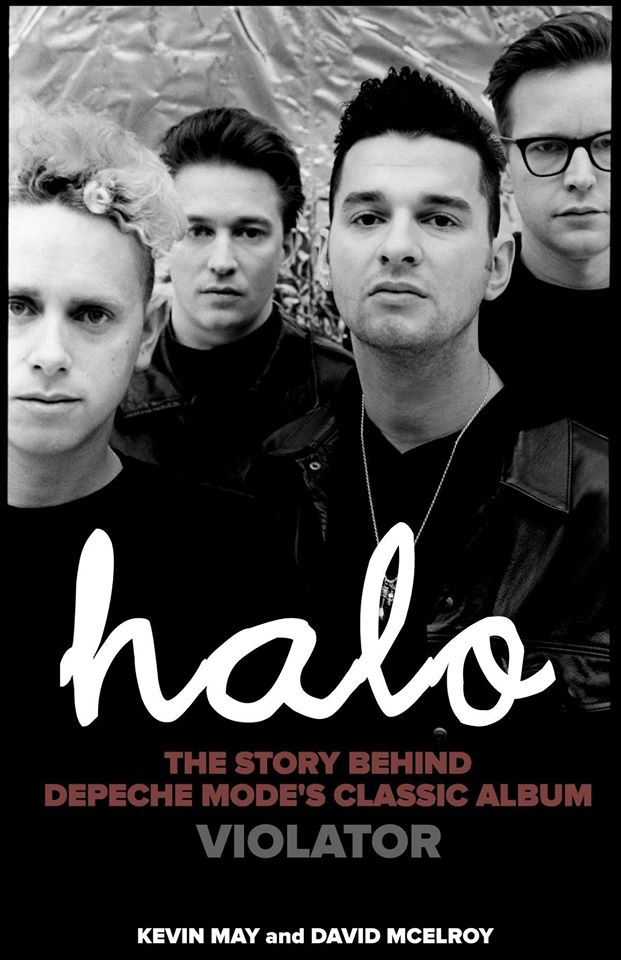
HALO - THE STORY BEHIND DEPECHE MODE'S CLASSIC ALBUM VIOLATOR


One aspect of this month's blog special that I'm particularly happy to share with you is that it will feature exclusive excerpts from Halo - The Story Behind Depeche Mode's Classic Album Violator, the book I have co-authored with Kevin May which is to released this May. Kevin and I got in touch when I ran the last month long blog project on Black Celebration in 2016. He contributed a blog and that led to his involvement in The Global Spirit Tour Project and, ultimately, to my involvement in Halo. 

Last year Kevin very kindly asked me if I would co-author the book and I was delighted to accept his offer. He's done a remarkable amount of work on the project and has uncovered numerous Violator related gems that tell the album's story in a new and fascinating way. I've chipped in here and there and have been thrilled to have been involved in something that's subject is so close to my heart.

Depeche Mode fans are well known for their in-depth knowledge of the band and trying to work out athe way of telling the story of the band's best known album in a new and fresh way has been a challenge, but we are confident that you are going to enjoy what's in store.

Me (L) and Kevin (R) at the Spirits In The Forest premiere in London, October 2019


Kevin has been running his own blog about Halo for a few years ago. I'd certainly recommend you have a look at it for everything related to the book.  Here's what the Author Bio page has to say about us:

Kevin is a UK-based journalist who normally spends his time writing about the travel industry for a global news service called PhocusWire, where he is editor in chief.

A 25-year career has seen him edit business publications MediaWeek, Travolution and Tnooz, write about escapees from prison, robbers and other shady characters for the Police Gazette at New Scotland Yard in London, and cover the shenanigans of local politics for the Essex Enquirer in Depeche Mode’s home town of Basildon.

He was born and raised near Rochester in Kent, holds a degree in criminology, a postgraduate diploma in magazine journalism, has won a couple of press awards, yet misses the backpacking days of his 20s (but is lucky enough to travel regularly for “The Day Job”).

Kevin first saw Depeche Mode at London’s Wembley Arena with two mates in November 1990… on the World Violation Tour.

Links: Twitter, LinkedIn, Website and Email.

David is a Glasgow-based blogger who has hosted the Almost Predictable Almost website since 2011. The blog focusses on Depeche Mode and is especially known for The Global Spirit Tour Project which saw David publish a fan-written review of all 130 concerts on Depeche Mode’s 2017/18 Global Spirit Tour, three of which were written by his co-author, Kevin.

David was raised in Castle Douglas in South West Scotland, where the local Woolworths was his source of all things Depeche-related from Enjoy The Silence onwards. He now lives in Glasgow and, in between coming up with new ways to talk about Basildon’s finest, spends his time supporting and shouting at Liverpool F.C.

Links: Twitter, Facebook, Blog


At various points this month we will share highlights from the book and even a few exclusives that you won't find in the book or anywhere else. We've spoken to as many people as we can think of who were involved in the Violator era. You can look forward to exclusive interviews with the likes of Francois Kervorkian, Billie Rae Martin, Gareth Jones, Steve Lyon, Paul Kendall and many more on the musical side of things. We've also spoken to various actors from the videos, people involved in the artistic side of things and a few fans too to try and tell the story of Violator in as full a way as we possibly can.  We're really excited about the book and we hope you are too.

We are hoping to release translated versions in a number of languages in addition to the English language version. More on that later in the year.

In tomorrow's blog, Kevin May will give you an insight into his own views on Violator and how it inspired him to start the whole Halo project. After that, we'll return to the usual blog content that sees me ramble on about formats, cover art and other nonsense.

Halo - The Story Behind Depeche Mode's Classic Album Violator will be released in May 2020 on paperback and digital. Keep an eye on this blog and both the blog and Halo's Twitter feeds for more information.

Sunday, 1 March 2020

THE ONE THAT I PREFER - VIOLATOR TURNS 30 : INTRODUCTION


Anyone who has even a passing interest in Depeche Mode knows Violator.  Many people, me included, discovered Depeche Mode during this era and many people, and I very much include myself here, became full on Depeche Mode fans because of this album. I can still vividly recall being lazy and getting a lift to Castle Douglas High School in February 1990 and hearing Enjoy The Silence for the first time on Radio 1's Breakfast Show. That was the moment I got Depeche Mode; that was the moment everything changed for me. On March 19 1990, I bought the cassette version of Violator at Woolworth's in Castle Douglas and started an obsession with that album. I listened to the tape endlessly, captivated by the music and instantly falling in love with every second of the album.

That was 30 years ago. 30 years. So much has of course changed since its release, yet Violator hasn't aged at all, still sounding as new and as unique as it did upon its release. It contains Depeche Mode's best known and best loved songs, is by far the band's biggest selling album and stands as a landmark electronic album. The mark Violator made may only have become more obvious with the passing of time, but it is worth remembering that upon its release, Violator changed the perception of Depeche Mode from lightweight popstars to stadium filling global stars. Gone were the days of performing on German television surrounded by hay bales and chickens - this was a very different Depeche Mode indeed. Their contemporaries were now paying attention too. When making Behaviour, the Pet Shop Boys were listening to Violator a lot; Neil Tennant commented that the band were "deeply jealous" of Depeche Mode's new album.

Violator really changed everything for Depeche Mode.


In March 2016, I spent a month celebrating Black Celebration on this blog with the help of a few guests purely because that album is such an important part of the Depeche Mode story. Violator, however, is arguably the most important part of the Depeche Mode story, so to celebrate its 30th birthday, a month long celebration of the album seemed the only sensible thing to do. As you'll see below, there are 31 days of posts planned with guest spots that are sure to be must-read posts. Thank you to Michael, Glen, DMK, Niggels, Amanda, Matt, Sean, Panos and Shaun for their great contributions.

As you'll also see, a few of these posts will preview some content from the book Halo - The Story Behind Depeche Mode's Classic Album Violator which I am co-authoring with Kevin May who has also contributed to the blog. The book will be out in late Spring/early Summer 2020 and I'm delighted to be previewing some of the content this month. I'm really excited about the book and I hope this occasional teaser this month whets your appetite for what is to come.

This is just a taster for The One That I Prefer - Violator Turns 30 and the first proper post of this month comes tomorrow. I hope you enjoy what is in store this month. Please feel free to comment, criticise, laugh or cry on the blog's Facebook page or on the blog Twitter or my own page.

March 18: The Wherehouse
March 19: Release Day


Tuesday, 7 January 2020

THE ONE THAT I PREFER - VIOLATOR TURNS 30


As you are no doubt aware, Violator turns 30 in March this year. To accompany Halo - The Story Behind Depeche Mode's Classic Album Violator, the book I am co-authoring with Kevin May which will be published this year, the blog will also be running a month long special looking at every aspect of Violator.

The One That I Prefer - Violator Turns 30 will run in March 2020 with a new post every day that month. It will feature excerpts from Halo, guest posts from Kevin, Glen Hammarstrom, Sean Salo, Panos Sialakas, Michael Rose, Michael Lyons, Amanda Stock and Niggels Uhlenbruch, a Dm Live Wiki special with Matthew Wolfe, a Pollicy Of Truth poll special with Shaun Coward (see Twitter here) and the usual nonsense from me. I hope you will all enjoy it as much as everyone seemed to enjoy A Month Long Period Of Rejoicing, the Black Celebration special in March 2016.

More news about this and Halo will follow soon. 


Thursday, 31 October 2019

DEPECHE MODE - SPIRITS IN THE FOREST, CURZON MAYFAIR, 30th OCTOBER 2019


Ahead of its release on 21 November, last night the Curzon Mayfair in London hosted a preview of the film followed by a Q&A with its director Anton Corbijn. Thanks to my Halo co-author Kevin May I was able to attend and I have to say that I really enjoyed the film. It's not a Depeche Mode concert film by any stretch of the imagination, in fact it's barely a Depeche Mode film at all. This is something very different for Depeche Mode.

As well as being there with the ultimate aim of writing this reveiw, I was also there on duty for Home because I was interviewing two of the fans who star in the film, Daniel Cassus and Cristian Flueraru. I had a very interesting chat with both of them which remains under wraps until it features on Home.

To the film then. If you are expecting to go along and see 90 minutes of live footage, you're going to be disappointed. The two Waldbuhne gigs in Berlin are the film's focal point certainly, but only in the sense that the fans' stories are told in the lead up to the gigs, with all six finally meeting up in Berlin. The gigs are more a backdrop than anything else. What we get instead is a very enjoyable and, in parts, moving film that highlights just how much of a role Depeche Mode play in people's lives. We all have our own similar stories about when we first fell in love with the band and how their music resonates throughout events in our lives, but if we tried to tell that tale ourselves, we'd quickly bore everyone around us - I can speak from personal experience there.

The film thankfully avoids that trap. The fans' stories are intriguingly told, interweaving as they approach Berlin where we see them all together enjoying the last two shows of the Global Spirit Tour. I enjoyed each story and the approach of letting the fans tell the tale rather than relying on the band's live performance is a bold move but one that works. The film is almost more of a documentary in places. I won't reveal any of the stories as you'll want to see them yourself. This isn't 101 part 2 either. It's much more personal. Contemplative rather than a month long bus party.

There is of course no Depeche Mode film without Depeche Mode and footage from both Waldbuhne gigs pops up throughout the film. As I mentioned above, this isn't a concert film and I was initially surprised at how little Depeche we saw. As the film progresses however, you notice that less and less. What footage there is serves as a reminder of how good those gigs were. There isn't actually a full song in the film - instead we have excerpts of songs, some longer than others. The live footage is shot in a very un Anton way too. We see the band in all their ragged glory, close up and personal and, for a DM/Anton film, unusally intimately. 

I was very surprised by the film, but pleasantly so. To try and tell the tale of how a band can dominate an individual's life is difficult as every fan has different reasons for loving that band, but Spirits In The Forest does that and does it very well indeed. I'm genuinely looking forward to seeing it again in a few weeeks' time.


After the film, Edith Bowman hosted a Q&A with Anton. He discussed the film generally, commenting that Depeche Mode's fans had a unique attachment to the band - "I work a lot with U2 and I don't see it happening there."  He confirmed that the concert would get a full physical release next year although, interestingly, only the Wednesday night show was filmed in full. Anton confirmed that they had "filmed a few things on the Monday" but not the whole gig. There was no suggestion of a release date however.

Away from Spirits In The Forest, he confirmed that his "substantial" Depeche Mode book will be out in a year or so.

Looks like 2020 will be a good year for Depeche Mode books.....

Tuesday, 15 October 2019

SHOULDN'T HAVE DONE THAT: DEPECHE MODE - MODE


A few days ago, Depeche Mode's social media sprang into life with a picture of a black box featuring the letter M superimposed over it. Over the next three days, the letters O, D and, you guessed it, E appeared and, before we knew it, a new 18 cd box set was in the works. This not exactly tough to decipher social media campaign was accompanied by the greying out of album covers on streaming sites. All very odd and all quite out of the blue.

Today, the details of what Mode contains have been confirmed and, frankly, it is a baffling release designed, it appears, to please no-one at all. The official site says:


"MODE is a comprehensive collection of the band's work to date - comprised of all 14 studio albums plus additional non-album material -- from 2017's Spirit back to DM's debut album Speak & Spell. In line with DM's signature aesthetic, the numbered, limited-edition set is housed in an elegant and minimalist black cube, with each disc similarly enclosed in a black, heavyweight card wallet. The albums' original covers have been re-interpreted in uniform black-on-black designs exclusive to this box set, and four additional bonus discs provide a chronological collection of non-album singles, b-sides and bonus tracks. Accompanying the audio content is a 228 page, gilt-edged book containing all of Depeche Mode's lyrics, compiled together for the first time, highlighting their collective visceral power and impact."


This is a remarkable pile of nonsense. Firstly, the phrase "in line with DM's signature aesthetic" is the sort of bollocks you read in overpriced furniture shops, coffee bars or on moronic Instagram accounts. If Depeche Mode, or DM as the site for some reason calls them, have a "signature aesthetic" it's music. It's not box design. Christ.

Also, they mention that the album covers have been ""re-interpreted in uniform black-on-black designs." On what planet are ANY of the band's sleeves appropriate for "re-interpretation?" If I contradict myself momentarily, surely one could argue that part of the band's "signature aesthetic" is their iconic artwork? Making them all black is someone taking the piss basically.

My final act in relation to this quote is simply to point out the phrase "visceral power." I mean, really.

Back on the official site, it then goes on to say:

"Reflecting on the set's content and design, the band commented, "With everything together in this all-black design it feels like a modern reflection of who we are and where we've come from. The set couldn't be more Depeche Mode."

That is staggering. At least for the forthcoming Spirits In The Forest, they attributed quotes to Dave and Martin in the press kit. For this, either the band sat down together, reflected on the set's content and designed and said the same thing all at the same time or this quote is simply marketing gobbledigook that only highlights the half-arsed way this box thing has come into life.

"Dave?"
"Yes Martin?"
"Fletch and I were just looking at the boxset"
"Reflecting on it's content and design were you Martin?"
"Very much Dave. The funniest thing happened you know. I said to Fletch, 'You know wuth everything together in this all-black design....."
"It feels like a modern reflection of who we are and where we've come from. The set couldn't be more Depeche Mode Martin?
" Good grief Dave! Exactly. We all said that thing at the same time!"
"Well Mart, it really couldn't be more Depeche Mode could it?
"No Dave, it couldn't."
"Time to write the new album Mart?" 
"Not yet Dave, no. Not at all."

And so on.

Anyway, to the music.

There is very, VERY little new here. Ignore the first 14 discs for a start. You have them already on cd, cassette, vinyl, mp3, German coloured vinyl, Uzbeki laser disc and so on. They're not remastered either or at least they're not newly remastered for this project.

Discs 15-18 feature "non-album singles, b-sides and bonus tracks" most of which are already available on the dazzling new CD format. There are positives however:

Disc 15, track 2 - Sometimes I Wish I Was Dead (Flexipop Version)
Disc 16, track 1 - Dressed In Black (Record Mirror Version)
Disc 17, track 2 - Death's Door (Soundtrack Version)
Disc 18, track 11 - "Heroes" (Highline Session Version)

The first two have not previously been released on CD and that version of Dressed In Black never officially released by the band so that's nice. The soundtrack version of Death's Door has also never been attached to a Depeche Mode release too. The only new thing here is "Heroes" which is a decent enough addition.

As someone who has collected more Depeche Mode things than are reasonable, those four tracks make me at least briefly consider buying this but they're not enough. Had it just been a B-sides and bonus tracks release, I'd have snapped it up. I'm not paying over £200 for four tracks however.

And that's the thing - who will buy this? It's obviously not aimed at hardcore collectors as there's nothing there to grab them. People who buy most Depeche releases have no need for it either other than to plug the hole it will create in their collection. Will casual fans shell out all that money just to have the albums in a box? I doubt it.

It's a perplexing release. Ok, the 12" reissue boxes haven't been to everyone's liking, but they represent a re-telling of the Depeche Mode remix story and at least have a purpose. This is either just a shoddy attempt to make money on the back of Spirits In The Forest, or it's just another way of trying to make money out of a fanbase who have already spent a lot of money on the things that are already in the box. If you compare it to the Sounds Of The Universe boxset, it comes off even less favourably; ok that boxset contained that album, but for £65 we got a cd full of demos which was a huge thrill. 

Whatever it is, unless Depeche Mode call a halt to their glorious career, this box set will quickly become out of date and incomplete when the next Depeche album comes out. That just adds to its general pointlessness.

What a very odd release.

Depeche Mode - Mode is released on 22 November