Showing posts with label DMTV Archives. Show all posts

Saturday, 13 May 2017

LIVE REVIEW: DEPECHE MODE, SPORTPALEIS, ANTWERP 9 MAY 2017

The next guest reviewer is Linda Meijer who is an Assistant from DM TV Archives, the wonderful site that gathers and preserves all Depeche Mode's TV and radio appearances for us all to enjoy. Linda specialises in finding all sorts of Depeche goodness and, as well as the Archives site, she also uploads interviews to DM Live Wiki, is a co-moderator of Depeche-Mode.nl and a co-admin of Depeche Mode Classic Photos and Videos on Facebook. Essentially, Linda is a godsend for Depeche fans. I was delighted when she volunteered to review the Antwerp gig.  I know you're going to love this.


Writing a review of a concert can be hard enough in itself, but when also you have attended another concert two days prior by the same artist which is still fresh in your memory, it is hard to go about writing without comparing the two concerts together. I've been thinking about writing this review without mentioning the concert in Amsterdam whatsoever, but it is impossible for me to so, so unfortunately I will have to make do...

I must admit that my overall experience is a bit spoilt since I had bought Early Entry tickets for both Amsterdam and Antwerp. For those wondering just how relaxed Early Entry is, I will say that it can vary, depending on both the crowd as well as the organisers. In Amsterdam, the people waiting in the Early Entry line were a lot more anxious, and once you start feeling a level of tension in others, it's hard for a group to take it down a notch. By the time we were almost left in, there was some pushing, stepping on people's feet, arguing about who gets to stand in front of whom. It's all a bit silly, of course, when you consider the fact that everyone will get a decent spot anyway. Once inside, we had to form a tight formation which no one was allowed to move away from, and the guards warned us that anyone who starts running will go back outside. So by the time we were at the stage barriers, there was a whole lot of adrenaline going on. In Antwerp, the fans were a lot more relaxed. Our line was supposed to be in the shades, but since we had all written numbers on our hands, we walked about in the sunlight. Once we were let in, we were allowed to walk around and go to the bathrooms or put our stuff in lockers or buy drinks. People respected the numbers on each other's hands a lot more, and so by the time we were front of stage, everyone was feeling amicably with one another.

This amicable feeling, along with the fact that it was my second concert of the tour which meant that I no longer had that typical teenage-ish fangirl "OMG they are back!" sensation that I had in Amsterdam, meant that I could enjoy the concert in Antwerp with a relatively clear mind without needing to shout at the top of my lungs every minute. The fans around me seemed quite relaxed also, which was kind of a bummer for The Raveonettes, since hardly one seemed to be excited about seeing a support act. The crowd was a lot more quiet during their set in Antwerp than in Amsterdam. Or maybe it had more to do with the fact that many of the faces who attended the Antwerp gig were also in Amsterdam where they played the same setlist, and thus they already knew their tricks.


I had landed in the middle part before the stage between Dave and Martin's spots, with only a short girl in front of me, so I had a pretty good spot. The stage actually seemed lower and smaller in the Sportpaleis than in Ziggo Dome, so there was a good view of the entire stage. As usual, the bass comes in pretty strong when you're front row, punching you in the stomach with every beat, so I'm not really able give a proper assessment of the sound quality in the rest of the venue, unfortunately.

Having Going Backwards as the opener was a good decision. It's no intro à la A Pain That I'm Used To, but at least it starts with more of a groove than In Chains and Welcome To My World. Although I feel that Anton's creations are a matter of hit and miss, I think that the colour-splashing backdrop that emerges from the dark really appeals the eye, especially once Dave arrives on the platform, thus forming a black apparition. This time around, Dave showed up in sunglasses, which he took off once he stepped down from the platform. Naturally, he received a warm welcome.

It being Dave Gahan's birthday (55 years old, a "significant birthday"), there were a few fans who thought of celebrating Dave's senior citizen status: apparently a group of fans wore birthday cake-shaped hats which you can see here:


A German woman named Annett had brought some white and red heart balloons with her as well as 4 red balloon letters that spelled "DAVE". She asked us to hold them up while the band was playing So Much Love, going along with the theme of the song. I myself had brought couple of "Happy Birthday" balloons which I had let spread around, as well as two silver balloons for myself that had the shape of number 5, thus forming 55. Since Annett and I were standing second row at the front of the stage, there is a considerable chance that the band saw the balloons... But all of that did not matter much because we were trumped by a French guy who goes by the name "Dave Spirit" who surprisingly managed to spread eight friggin' thousand LED-containing "Happy Birthday Dave Gahan" balloons among a 20.000 sized crowd which were meant to be activated right after So Much Love, thus not only obliterating my and Annett's tiny balloons but also leaving the band visibly in awe as they saw nothing but thousands of red and blue waving lights. Many fans continued to wave the balloons throughout the gig, but it became spectacular again when Peter Gordeno began playing the "Happy Birthday" song on his piano after Martin had performed A Question Of Lust, which cued the audience once again to wave about frantically with their balloons, on which Dave commented "a big party". You can see it here on this video from YouTube (which also shows my mediocre "55" balloon):


All this along with the birthday cake that a bakery delivered to Dave at the venue around twelve-ish, along with skull shaped Belgian chocolates that I had indeed seen in Dave's car as they left their hotel the following day, makes it clear that his birthday certainly wasn't forgotten.

It's hard to gauge the liveliness of the overall crowd when you're pretty much front row, because it can be said that the people at the front are far more active than those in the back. I thought the crowd was quite active: what they lacked in jumping and arm waving in comparison to the crowd in Amsterdam, they made up in singing along to every lyric of every song. Or so it appeared in my vicinity, because although I could hear plenty of people singing along to the chorus of Everything Counts, Dave Gahan was visibly underwhelmed, and at one point started laughing at us and looked at Martin and mouthed something to the effect of "it's not working". Apparently, no matter how many times Dave did the "come on then" hand gesture, the crowd simply wasn't singing loudly enough. But from what I could see of the crowd, everybody was tagging along. It was also clear that many people had not looked at the new setlist yet, because at the start of quite a few songs, noticeably Home, Everything Counts, Somebody and "Heroes", people would only start "woo"-ing once the first lyric had been sung, as a way of saying "Hey I recognise this song!" I do not mean that as critique: it's just one of those things of which you easily forget that not every fan reads every detail about a band every single day until there are no more surprises left. Overall the reception of most slower songs like In Your Room and Martin's solo songs went relatively well, although the classic showstoppers like Personal Jesus and Never Let Me Down Again were of course received best. Even Wrong, of which I don't exactly remember it getting a good reception eight years ago, went down quite well with the crowd. But, understandably, the new Spirit songs Cover Me and Poison Heart, which are very slow songs to boot, did not exactly entice everyone up in the nosebleed sections. But hey, you can't have everything. I was also pleased to see that the amount of smartphones/cameras around me wasn't too obtrusive, meaning that most people seemed to prefer actually seeing the band with their own two eyes rather than through a camera lens, something that Dave has commented on recently (http://www.t-online.de/unterhaltung/musik/id_80664426/musik-dave-gahan-findet-handys-bei-konzerten-nervig.html)


Most eyes were focused on Dave anyway, since Martin did not appear to be particularly attentive to the crowd so far during this tour. The only eye contacts and smiles he makes are during the few moments when Dave is looking at him for eye contact, or when Dave hugs him like he did before Walking In My Shoes. He did smile when he steps on the catwalk during his solo bit, but it had a bit of a "Hey were go again" twang to it. But maybe he has other things on his mind still, like his two newborn children with whom he won't be spending any proper quality time until a year from now. Oh well, at least he was wearing body glitter for the first time this tour, hopefully that will activate his tour-mode soon enough.

Kevin May was also correct in his review of the Amsterdam gig about the crowd's delay in managing to spot Dave up on the higher platform. Not only did it take me a while to find Dave on there, but I could hear the crowd having trouble seeing him on there immediately too. A light on the man there would indeed be best. Speaking of lights, I really like all the lights that shine down on the stage. They especially wowed me during Everything Counts: the light blue lights that swirl on the band sort of reminds me of sunlight that can be seen underwater. As for the screen projections, the aforementioned backdrop for Going Backwards but also the ones for Cover Me and "Heroes" work really well, I think. But, personally speaking, I think the projections for Where's The Revolution and Martin's solo songs are too simplistic and the one for In Your Room is too bright.


I would say that the concert in Amsterdam was slightly better simply than the one on Antwerp because of Dave Gahan's enormous energy that he exuded during the former. Still, it should be said that comparing Dave's different levels of energy between two gigs is like comparing Mercedes and Ferraris - one might score better on one test, but the other one is still hella good. All the hip shaking, the ball grabbing, the finger pointing, the smiling, overall engaging with the crowd... He could never half-arse it, not even if he tried. And so it still leaves for a very memorable night. That and the eight friggin' thousand balloons.


------------------------------------------------------------------------------------------------

Thank you very much indeed Linda. 

Tuesday, 8 March 2016

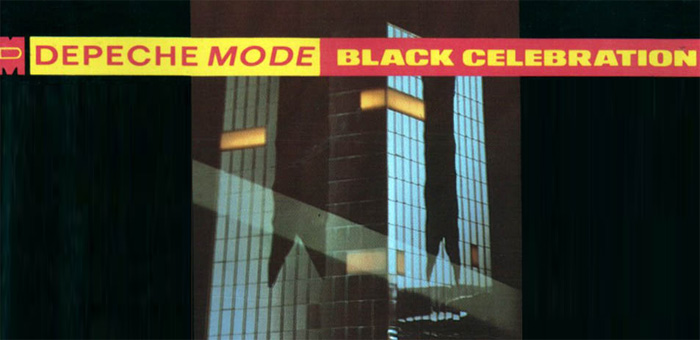
RETRO #2: BLACK CELEBRATION REVIEWS

When Black Celebration was released, Depeche were still viewed with suspicion in their home country. Their move from an angelic synthpop boy band to metal bashing purveyors of gothic synth majesty was not taken that seriously in the U.K. and so, a lot of the music press tended to treat them pretty harshly. The album's reviews were mixed to say the least which, when you look back on them now, is pretty funny given what Black Celebration did for Depeche in terms of increasing their profile. Anyway, I thought it would be interesting to see what the music press had to say. Again, thanks very much to the brilliant DM TV Archives for allowing me to plunder their site.


Let's start on a relatively positive note...

15 MARCH 1986 - RECORD MIRROR

Here are some things to admire about Depeche Mode: (1) their self-sufficiency, (2) their refusal to follow anything but their own fashion, (3) their refusal to be anything but themselves, (4) their unswerving ability to come up with great, fresh melodies. 

Black Celebration is a comfy progression for the Deps, but it contains no huge surprises. It keeps to the rules they set for themselves in terms of quality, value for money, tunefulness and experimentation. It kicks off with three killer tracks – Black Celebration, Fly On The Windscreen and A Question Of Lust, the latter being a prize crystal-clear, soaring Mart-on-vocals special. But it really is like putting all your cards on the table before the game’s finished.

Of the raunchier numbers, A Question Of Time stands out, as does the single Stripped and the moody Dressed In Black. New Dress, although it pumps and throbs, has rather excruciating lyrics, ditto Sometimes, one of the rather too many sweet little ballads. Although the melodies are gorgeous, Martin seems preoccupied with sounding like the gawky school choirboy. Mr. Gore is again lyrically concerned with tenderness, sweetness, closeness with another, and putting his heart on his sleeve. That’s fine, balanced against Depeche Mode’s more exciting, sinister side. Beware the girly swot notebook with the arrow through the heart, boys, and you’ll rool OK. Strength through wimpery!
Betty Page

Not a bad start. The next one just gets it all wrong though, but that's what Sounds tended to do

15 MARCH 1986 - SOUNDS 


DEPECHE MODE: no nudes is good nudes 


DEPECHE MODE 'Black Celebration' (Mute STUMM 26) **1/2


THE TV'S burnt the toast, the hoover's eaten the carpet and, in the background, pop's parasites are chewing at life and spitting out synthesised saccharine that dissolves in the air and not in the heart. They stride purposefully down paths of misguided desire...and get lost. Depeche Mode play Depeche Mode with conviction, the mould is cast and the cast are convinced. As menacing rhythms beat beneath treacle-covered whims, they sing of sex with disposable belief. When naivety swamped their soul, youth was held up as the reason — now, though, no such excuses are valid and the real world still waves from afar. 

Black Celebration is a vision of love as seen through the eyes of pop's 'subversives' (sic), mean, moody and marmalade. Life can be a bitch when you're cast as court jester and you've dreamed of being king. Fly On The Windscreen is too perceptive for lunch. "Death is everywhere/There are flies on the windscreen/For a start/ Reminding us we could be torn apart"Thanks lads, but I've eaten — besides, I've swallowed too much shit already. 

Depeche Mode are bored with last week's toys and, anyway, SPK wanted their angle grinders back. SO now they're busy playing with John Carpenter's ideas, pulling the legs off gripping soundtracks and turning them into harmless scenes of banality, with no twists and many happy endings. I hate happy endings. When they start singing songs about Princess Di's clothing, New Dress, you know that you're in safe hands and that there's nothing lurking around darkened corners to surprise you. But Depeche still reign supreme in the world of programmed pap, their music still has a nagging simplicity that is ensnaring. 

When hinting of depth, they beg an inquisitive leap, but such a foolhardy act only gets your ankles wet as their nursery rhymes squidge between your toes. I treat the garden to my presence and reflect on their poetic observations: "Sometimes/Only sometimes/1 question everything/And I'm the first to admit/If you catch me in a mood like that/I can be tiring/Even embarrassing." Upon digesting this gloriously incisive self appraisal, I let out a euphoric cry before tearing up the sleeve and feeding it to the birds.

KEVIN MURPHY

Thanks Kevin Murphy. That was incredibly incisive. I imagine he actually got paid for writing that which says more about his employers than it does about him. Let's see how the NME dealt with it. Ah yes, in that classic NME way...

15 MARCH 1986 - NME


Nipple Erectors
Somewhere, between Basildon and Berlin, is a place that Depeche Mode call home. It's an uncomfortable abode though it gleams and sparkles with pristine decor and designer-built functionalism, a matt-black (naturally) dream home whose geometrical symmetry hides a thousand sins. Although Depeche Mode - and their mainman/songwriter Martin Gore especially - long for that certain Euro-ambience, these four suburban boys are forever blighted by a peculiarly English sense of propriety, a pop protocol that drips with politeness.

This well-behaved music threatened to slip from its axis on '83's quite invigorating Construction Time Again when the awakening promise of Everything Counts and More Than A Party approached the realm of cheeky subversion. Alongside Gore's political awareness grew an unhealthy fascination with the sturm und drang of German industrial culture, the viral music of Neubauten and our own Test Dept. Yet what tension Depeche Mode possessed of late - and there was little to be detected on last year's atrophied Some Great Reward - came from the frisson of Gore's dark Teutonic pretensions with the continued tyranny of studied, harmonious order that his three accomplices seemed quite happy to perpetuate. As a virus, Depeche Mode's music is closer to sleeping sickness than to any nerve-wrenching disorder. Worse still, the psychology-by-numbers cant of a song like Masters And Servants [sic] teetered ominously close to the chanting histrionics of a Tears For Fears' "Shout! Shout! Let it all out!" exegesis.

On Black Celebration, the contradictions continue and continue to remain unresolved. Martin Gore's presence is stamped all over this album, not least in the sex-death-lust angst which informs virtually every lyric whilst the accompanying music, although often hinting at impending disorder, is a paradigm of well mannered electro-pop. Opening with the title song, Black Celebration, which has nothing to do with the recently established Martin Luther King Day and a lot to do with being stoical in the face of life's sheer mundaniety, the album establishes a mood that is dark yet faintly ridiculous. Over those perfectly constructed jigsaw melodies, David Gahan's cloyingly winsome voice ennuciates Gore's adolescent fragments of despair. Fly On The Windscreen includes the immortal line "death is everywhere" over a propulsive, multi-layered background complete with dismembered voices and cut-up sound patterns that are actually quite winning. Again, on A Question Of Lust, the overblown introspection of the lyrics defeats serious analysis whilst Sometimes approaches the analyst's couch as Gore, via Gahan, informs us, without a hint of irony, " ... I'm the first to admit/If you catch me in a mood like this/I can be tiring/Even embarrassing". Never.

It is left to the music to provide what relative highlights there are and, within their own parameters, Depeche Mode create a resonant, if undemonstrative techno-pop tapestry where the various percussive and melodic components often lend a rich textured sheen that is not without a certain depth. A Question Of Time, with its rising and falling structure, manages to perfectly complement an exceptionally curt and aggressive Gore lyric whilst New Dress ruptures the prevailing introspective and fingers the media trivialisation of "real" news. Indeed, when the songs address topics other than the composer's state of mind - as on the evocative exploration of loneliness that is World Full Of Nothing - Depeche Mode sound like a lot more than just a high tech, low-life melodrama. For the most part, however, they continue to provide a soundtrack for the up-to-date, matt black bedsit: dark, yet faintly ridiculous.
Sean O'Hagan

Firstly, Some Great Reward was from 1984. Secondly, it's Master And Servant. Thirdly, Martin sings Sometimes. Fourthly, that's just a load of bollocks. What did the NME's arch rival and, incredibly enough, generally worse Melody Maker have to say?


15 MARCH 1986 - MELODY MAKER


BLACK IN THE NIGHT

The same old song. That Depeche Mode are willing to worm their way out of their lucrative niche as mega-cuddlies is encouraging even if they've been at it so long they've fashioned a career from sweet abrasion. Damn sure they know they’ll never swap their teddy bear image for chart terrorism but the effort has become the sole fuel to Martin Gore’s fixations.


It’s depressing, though, that in their own small struggle for personal and artistic dignity, Depeche have only managed to trade in one set of cliches for another – white for black, bright for bitter, tunes for twisted chants.


Black Celebration finds Depeche even more over-anxious than they were on the depressing Some Great Reward to shock for the sake of it, pussycats desperate to appear perverted as an escape from the superficiality of teen stardom. Dressed In Black is just Master And Servant revisited, an adolescent masturbatory fantasy. Similarly, Fly On The Windscreen attempts to evoke the claustrophobic swamp intertia of Mute labelmate Nick Cave’s Wings Off Flies. These songs tell us, time and again, that they’re desensitised to love, that the only release open from spiritual malaise is a momentary tactile passion, a lunging, groping lust.

More saddening still is New Dress, an unbridled attack on press hypocrisy which, in its humourless juxtaposition of headlines, (“Famine horror, millions die”) against its refrain (“Princess Di is wearing a new dress”) recalls nothing more than a secondary school poem.

As always, it’s difficult to discern whether Martin Gore’s clumsy lyrical truisms are intent on promoting his over-apparent desire to assume a sinister dimension on whether he’s honestly concerned for his subject matter. Are the Depeche of A Question Of Time revelling in the scenario of under-age sexploitation as an exercise in biting the hand the feeds, or are they genuinely dismayed at the inevitable moral decay of this rotting nation?

Then again, it’s precisely Gore’s naively logical lyrical equation, wedded to the established Depeche linear musical mode, that occasionally adds up to something successfully whole, something that incorporates optimism. The title track’s a throbbing metallic purging of the daily grind, Stripped is pleasingly minimal, if mannered, and there’s a wonderful hope in the appalling New Dress: “You can’t change the world / But you can change the facts / And when you change the facts / You change points of view / If you change points of view / You may change a vote / And when you change a vote / You may change the world”.

But it’s when Depeche are being unconsciously throwaway, when they relax their straining against their reputation, that they attain the sublime. A Question Of Lust is gorgeous, an Almondesque torch vocal mounting a simple electronic code worthy of The Human league. Mostly, though, Black Celebration is Depeche fucking with their formula and the real shock is the insight it provides into the troubled psyche of Martin Gore, a lad struggling to grow in public and, for all his opportunities, finding only sleaze and filth to feed off. They’d have it sickening – Gore a willing victim desiring the symptoms he purports to despise.


Silly boys.

Pah. Ok, it's better than the NME piece, but still...Dressed In Black "an adolescent masturbatory fantasy?" Sod off. 

No 1. magazine was succint but thankfully seemed to like the album

22 MARCH 1986 - NO. 1 MAGZAINE

Depeche Mode are one of those bands whose music shouldn't be given the “gut reaction” treatment. Following last year’s Some Great Reward, this LP sees Martin Gore following much the same lines. He will persist in asking the kind of questions that there really are no answers to. Musically there is a riot of atmosphere which should ensure many a Depeche fan will be dipping into this one over and over again. Best tracks, aside from the single Stripped, are Here Is The House and World Full Of Nothing.
4 stars

See NME? That's how you do it. Plus No.1 got it right about Depeche fans dipping into the album over and over again. 

The L.A Times review perhaps gives us a clue about what was going to happen to Depeche Mode in the U.S as they clearly love it. Note though the mention of "the last track." But Not Tonight featured on the U.S. version of the album for reasons I've gone into and inevitably moaned about previously

27 APRIL 1986 - L.A TIMES

Love A La Mode
RECORD RACK
LORI E. PIKE

"BLACK CELEBRATION." Depeche Mode. Sire. 

David Gahan's alternately husky and breathy vocals are emotive, and the blend of warm tones with ominous chugs and clangs makes these sleek, modernistic and enigmatic songs a perfect sound track for tentative love in the industrial age. Songwriter Martin Gore has pulled off a double-whammy, backing evocative, thoughtful lyrics with a seamless suite of danceable, hummable melodies. The tension builds and releases as Gore periodically wrests aside his bleak cynicism to let vulnerability and hope gleam through. Thus, the utter despair of Fly on the Windscreen eventually gives way to a tender homily to home and security in Here Is the House. But the best is saved for the last track, But Not Tonight, a bouncy, refreshing exultation about new beginnings and being alone but not lonely. Rarely has introspection been so tuneful.

I don't think anyone would agree that But Not Tonight is the best track even on the But Not Tonight 7" single, but this review shows that Sire must have known the American record market I guess. Or at the very least, they knew what Lori Pike liked.

The Washington Post then had its say

12 JUNE 1986 - THE WASHINGTON POST

MICROCHIP music for moody moderns: Black Celebration is another batch of dire and doomy electrodirges from Depeche Mode, pop pap apparently aimed at a burgeoning market of budding adolescent existentialists.

Songs like Black Celebration and Fly on the Windshield (sample lyrics: "Death is everywhere / There are flies on the windscreen for a start / Reminding us we could be torn apart / Tonight...) would seem likely to reinforce suicidal tendencies, but taken as a whole, this album is so unremittingly morose it becomes almost comical. 

Over the space of five albums, Depeche Mode has refined its distinctive sound, marked by a hammering dance beat and trademark musique concrete blend of "industrial" metallic noises and odd sampled sounds - breathing, slamming doors, flushing toilets. 

Many of the production gimmicks on Black Celebration are arresting, but the group has simply put more polish on the basic formula. Singer/songwriter Martin Gore's listless, limited vocals sound as if he's delivering them through a vacuum cleaner, snapping on different attachments for each number. The songwriting is similarly formulaic, with each song based on a compilation of elementary electronic riffs, though Depeche Mode is getting more ambitious - the synthetic choral chant from It Doesn't Matter is baldly borrowed from the Philip Glass canon.

Ok, just to be clear it's WINDSCREEN not Windshield. Just because that's the American word for the perfectly good, standard English language version doesn't mean you can change it when IT'S NOT WHAT THE BLOODY SONG IS CALLED! I mean, you don't refer to the band Pavement as Sidewalk do you? Plus the review is a load of old arse. "Quick I'd better mention Philip Glass so that I sound pretentious." Good grief.

Rolling Stone paid a bit more attention...


By Mark Coleman

Routinely dismissed as a band of synth-pop robots, Depeche Mode actually uses its machines to make some of the most human sounds around. Black Celebration is certainly this British quartet's most melodic effort to date: the clanging disco-concrete fusion of early LPs like Construction Time Again has mellowed into a brand of brooding, romantic music only hinted at on last year's Some Great Reward. "I haven't felt so alive in years," gushes singer Dave Gahan on But Not Tonight, this LP's ghostly closer, although for composer-lyricist Martin Gore, even celebration is pretty bleak.

Gore dissects his gloomy obsessions with wit and intelligence. He's abetted by his bandmates, inventive technicians who understand that machines weren't meant to sound like souped-up electric organs. Despite its campy horror-show title, Fly on the Windscreen — Final is the sort of matter-of-fact meditation on mortality most people flash on behind the wheel of a car. A bank of synths buzz ominously through the verses of Fly, amplifying the unease, then whoosh gratefully when the first chorus reaches for life's only solace: "Come here kiss me NOW."

Most of these ditties are unabashed love songs, albeit brutally honest — quirky ones that pick apart popular notions of emotional independence (A Question of Lust) and adolescent sex (A Question of Time, World Full of Nothing) to an itchy, mechanized beat. Songs like these and some serious image-mongering have won Depeche Mode a loyal teen following, appropriately enough. But underneath their bleached-blond, black-leather pose lurks musical maturity and a wry sensibility deserving of a wider (read adult) audience.

But Not Tonight a "ghostly" track? That's a first.

Let's leave the last word to U.K. pop mag Smash Hits. They always loved Depeche and they loved Black Celebration


DEPECHE MODE: Black Celebration (Mute)

Despite their seemingly endless stream of brilliant singles Depeche Mode always seem to go a bit wonky when faced with a whole album to fill. Not this time though. Black Celebration doesn't only see them go a bit weirder with lots of dark, mysterious percussive episodes (sung by Dave Gahan) snuggling up against sweet, fragile and rather sinister ballads (sung by Martin Gore) but is also the first time they haven't had to throw in any second-rate stodge. Their best album yet (apart from the very brilliant Singles LP, that is) (8 out of 10)


So there you go. How the U.K music press and a couple of American reviewers treated Black Celebration when it came out. Ultimately, it's fun to read these things, but even now, the likes of Melody Maker and NME still have the ability to rile me - and I really am far too old to react like that.

Monday, 7 March 2016

RETRO #1: DEPECHE MODE INTERVIEW FROM NO. 1 MAGAZINE, 26 FEBRUARY 1986

One site that I would recommend you all visit is Depeche Mode Television Archives (http://www.dmtvarchives.com/) They have compiled an incredible number of interviews, television appearances, pictures and more spanning the whole of the band's career. Even what you think is a quick look at the forum there can turn into hours lost in the history of Depeche. The forums and archives can be viewed if you aren't a member of the site, but you 'll have much more fun if you sign up. Who knows - you may have something in your own archive that you can contribute to the site.

The good people at DM TV Archives have allowed me to use their material this month and I'll be sharing various things from their treasure trove over the next four weeks. Today though, I thought it would be of interest to share an interview Depeche Mode gave to the now defunct UK magazine No. 1 from February in 1986. I thought (1) it would help give some historical background and (2) help my writer's block which, as I type this on Sunday 21 February, is causing me some concern. Here's the interview - enjoy it and go and register at DM TV Archives. You will love it there.


BACK TO THE WALL
[No. 1, 22nd February 1986]


DEPECHE MODE EXPLAIN THEMSELVES

For Depeche Mode Berlin has become a second home. It’s a city which suits their temperament and throws a reflection across their music. Berlin is a strange, eerie place, an island surrounded by a wall and bordered by a no-man’s land littered with crosses marking the graves of those who tried to escape from the East and failed. In February Berlin is chilling in every sense, it has an edge and Depeche Mode like that.

In the past three years, Modey have spent a third of their lives here, mostly in the famous Hansa Studios where they recorded “Construction Time Again” and “Some Great Reward”, and are now finishing the new LP, “Black Celebration”.

Walking out of Hansa’s control room, the members of Depeche Mode are a black celebration themselves. Dressed from head to toe in black leather, their skinny frames and pale faces make them appear mean. In fact they’re all exceedingly placid and pleasant but the image suits them like a second skin.

“I feel ill,” Dave Gahan announces, indicating some stains on his brand new leather pants. “Sick.” Alan Wilder and Martin Gore follow him into the rehearsal rooms and hit the fridge. It’s not just armies that march on their stomachs. When Depeche are on tour or in a studio they keep a well stocked larder of vegetarian goodies for snacking on.

Martin examines a cheese roll with that customary far away look in his eyes. He always looks like he’s just about to say something earth-shattering. But he never does.

Fletch is bumbling about in his usual fashion. He reads a story in the Sun about “Simon Jilting Yasmin for model” and tuts. “There’s no truth in it but these people ask for it.” Fletch is a moralist.
  
WHERE THERE’S A WALL
 Eventually Dave Gahan feels well enough to chat. I ask him what the fascination is with Berlin?
“It’s the atmosphere. It’s a little place and it feels very cut off. There are no distractions like in London. I can’t work in England anymore. It’s funny. The studio is right next to the Berlin Wall but none of us has ever been to the East. Martin tried once but they refused him entry. Didn’t like the way he was dressed. Thought he was a hooligan. People imagine we work here because it’s wow, you know, really heavy, but I don’t feel that. The place is quite suburban. Berlin’s like Brixton.”

Fletch puts down his paper and we talk about the new single “Stripped”. All the band are excited about the song which sounds quite risky after the cheerfully old-fashioned pop of “It’s Called A Heart”.

Fletch: “The idea of “Stripped” is to get away from technology and civilisation for a day and get back to basics in the country. It’s about two people stripping down to their bare emotions. In the video we’re seen demolishing a car and taking a TV apart… it’s a bit, er, symbolic.”
Gahan says: “It’s not about sex. It’s to do with having nothing except yourself. The people in the song could strip off if they wanted to though. The song is also a bit chancy. It doesn’t capture you immediately. Some people hear it and say “Is that it?” Others go “Brilliant!”.”


THE POWER AND THE GLORY
All the band agree that the single will stand out on the chart but Dave seems to like it more than the others. “I stuck out for it ’cos it excites me. It feels powerful to sing. The chorus is rousing and mob-like which I can get off on. Our last single was just alright.”

From what I heard of the new album, “Black Celebration” is going to surprise everyone who still thinks Depeche are a weedy pop group. Martin Gore’s writing gets closer to the bone every day.

The title sounds a bit morbid I venture. “Yeah it does,” Dave agrees, “but it’s a common thing. At the end of a working day you go out and drown your sorrows no matter how shitty you feel or how bleak your future looks.”

Martin and Alan join in, but first Martin makes a rare announcement. “I feel at the moment I’m coming across totally wrong in interviews. And it’s all my fault. I can’t do anything about it. I say the wrong things.”

Having made this rather strange little speech Martin falls silent for a second. “The problem is, I can’t open up and explain the songs. When I write it all seems logical. I create the right atmosphere – which is an attempt to get away from the softness of contemporary pop – but I know we’ll never be totally extreme. Depeche Mode is a democracy and that stops me writing everything in one direction. Apart from that I still believe in an old-fashioned song style and I like lots of melody. Some people can’t handle that. We can be really poppy one minute or we can sound harder and moodier.”

Alan Wilder reckons that the band are “alienating some of the teen market but gaining more respect. We don’t put ourselves across very well but we look better these days.”

Depeche Mode always put a line on their album covers which tries to sum up the mood of their work. This time the line is “Life In The So-Called Space Age”, a typical example of Martin Gore’s mixture of cynicism and common sense. "It means that despite all this,” he gestures vaguely around, “all this can go on and nothing is changed. People are still emotionally numbed by material possessions.”

Wilder qualifies the statement. “So many interferences surround you in the Western World, they take the place of your emotions. People say Martin’s songs are simplistic but that’s a positive factor. He gets his point across.”

Not everything on “Black Celebration” is so sombre although one song, “It Doesn’t Matter (2)” is, Martin says, “very desperate. Very very morbid. There is one quite funny song called “Sometimes” which is about someone who questions their surroundings and ends up becoming tiring and over apologetic.” Gore laughs nervously because he is a very autobiographical pop writer and the song is about him.

A beer arrives so Martin perks up. “We’ve got this new minimal concept. I try to do the least amount of work possible so I’ll get paid the same and be able to go out clubbing more.”

The rest of the band have a Martin Gore theory according to Alan. “The theory is Martin is a lazy sod who writes an entire album in an afternoon but pretends he hasn’t so he can take ages to think about other things and do nothing.” Martin makes another of his off the cuff statements. This one is a real cracker. “Four people is the right number for a pop group. History bears me out. Five people looks wrong and three is plain stupid. Four looks powerful.”

You’ll be able to see just how powerful Modey look and sound when their five month world tour kicks off in late March. Dave is enthusiastic:

“We haven’t played England for a while but I’m dying to get into the big halls again. I imagine some fans are a bit cross that we’re doing Wembley but we have to break out of this credibility thing. I thought The Cure doing Wembley was brilliant and I know I need large crowds these days to excite me.”
  
BAND AGED
In this mood Depeche Mode are showing every sign they’ve grown up, moved on, as they put it. Gahan isn’t one for any false modesty. “No, we’ve influenced a lot of bands into a harder sound, Arcadia perhaps, Tears For Fears definitely. It paid off for them. Frankie did that too. I can’t stand bland, textured music. No one goes out on a limb. Glammy pop bores me silly. Obviously I won’t name them because I hate everything in the charts. I ignore it. I suppose A-Ha will take away everyone’s girl audience for a while because they’re hunky good looking chaps,” Gahan chortles. “The problem is that they probably speak funny.”

 Fletch looks worried. “They probably speak better English than you do.”

Dave: “Rubbish. I bet they don’t.” Gahan has got the bit between his teeth. “We haven’t got any competition. We’re out on our own. You can’t categorise us. Maybe sometimes we’re a bit fussy with not putting pictures on covers but it’s better not to go downhill and be stuck with a stupid image. Look at this stuff about Simon Le Bon: poor bloke’s just got married but because the Sun have got a grudge against him they’ve stitched him up. For us it’s a fluke that we’ve avoided all the crap but I could see us getting huger. The German press invents stuff about us all the time.”

 One of last year’s best kept pop secrets was Gahan’s wedding to long time girlfriend Jo. “That was good. Just me, Jo, Fletch and Grania [sic] (Fletch’s girlfriend), mums and dads. Alan and Martin missed the registrar’s but came to the party. It hasn’t changed the way we are. We’ve been together ages.”


Dave is the last Basildon boy left in Depeche. Even Fletch has moved out. “Best thing I’ve ever done. It’s the first time I haven’t either been with parents or in a hotel room.” I ask them what they think about tax exiles and Fletch, who is normally the most self-effacing member, explodes: “It’s DISGUSTING.” He shouts. “It’s a joke. All these so called socialists. Look at Spandau! You take a year off and your career suffers. There’s no place like home. I believe in the welfare state and if that means paying 50% tax I’ll do it.”

Gahan agrees. “It’s like the 70s all these bands living in mansions. If we did that the band would split up. And the money they save on tax they spend on first class air fares. They all come home every weekend!”

Fletch is really hopping mad now. “Mansions! Air fares! They’ve got no confidence in their own futures. It’s like they’re making it while they can. We intend to stay around.”

Dave Gahan gets up and wanders towards the control room. Before he goes in he turns round and says, “The thing is, by Christmas we’ll all be millionaires anyway. We know that.”
I’m not sure if he was joking or not. 
  
Depeche Mode must rate as one of the most consistent if not one of the best pop bands of the 80s. They have a distinctive sound, but not so much so that each release sounds like the last one.Their lyrics actually mean something without being pretentious and over the top. Yet they never seem to get the adulation that their competitors get. Strange that. 

Let’s hope that the haunting stillness of ‘Stripped’ puts them up where they belong, before Frankie and Spandau reappear.