Showing posts with label Melody Maker. Show all posts

Wednesday, 7 July 2021

DEPECHE MODE - THE SINGLES 1981 TO 2021 - PART 32: IT'S NO GOOD


Hot on the heels of Barrel Of A Gun's Top 5 success, Depeche Mode struck chart gold again with a song that instantly became a Depeche classic - It's No Good

As well as the song itself, we got more ridiculous CD boxes, some quite horrendous remixes and a fantastic video. A mixed bag then, but let's not lose sight of the real star here - the single itself.

WRITTEN IN THE STARS ABOVE - IT'S NO GOOD

The Single

Picture courtesy of Michael Rose/depmod.com

It's No Good, a single that very much avoided living up to its name, was released on 31st March 1997. BONG26 was almost unanimously warmly greeted by the critics. The NME said:

"Cold Turkey comeback duties duly taken care of, it's back to something approaching groove - underlaid lovesick business-as-usual for la Mode. The emphasis being on the 'sick', for 'It's No Good' is another of Martin Gore's appallingly pretty odes to someone for whom the creak of his leather bodice awaits as surely as sweat accompanies rumpo. Amid the insistent electro diktat, Dave Gahan sings with disarming sweetness: "Don't say you're happy/Out there without me/I know you can't be/'Cos It's No Good" When it comes to such ultra-tech, yet trad toilet-seat drama, Depeche Mode are untouchable, a fact the litany of unenlightening remixes by the likes of Speedy J and Andrea Parker only serve to emphasise." 

You may recall we met Peter Andre in the last blog. Well, once again, Peter and Depeche Mode's paths crossed, this time when Peter was invited to review the week's singles by Melody Maker. Here's Peter, a man "famed" for ground-breaking songs like Mysterious Girl and Insania (if you haven't heard of either please do not look them up - I accept no liability for what may happen to you), talking firmly out of his arse:

MM: What more can I say?
Peter: They've come back from the dead, haven't they? And I think they've done it really well, too, though I don't like this as much as I liked some of their old stuff. This sounds a lot like U2. It's OK, I don't dislike it, but I preferred the last one. I don't really think it's their best material. But they're a respected group: I suppose you can't knock the fact they've started just knocking out song after song after song. They probably know that some will be liked more than others.
MM: But would you bring out a single that you didn't think was the best thing you could possibly do?
Peter: That's a good point, actually. I never though of it that way. Maybe they should have waited a couple more years and come back when they knew they had something amazing up their sleeves.

Back in the world of musical opinions you can trust. Billboard said:

"The second single from the act's new album Ultra is considerably more low-key than the more caustic previous hit Barrel Of A Gun. In fact, this is the single that die hard Depeche Mode disciples have been starved for, in that it somewhat revisits the stylistic days of Master & Servant. The music cruises at a funky electro-pop pace, with minimal sound-effect clutter. Rather, the focus is on Dave Gahan's forlorn performance and Martin Gore's sensitive lyrics."

Ok, the Master & Servant comparison is, at best, bewildering, but a decent review overall. 

Music and Media, apparently "Europe's Radio-Active Newsweekly," said:

"After the spiky Barrel Of A Gun, Depeche Mode return with a sound which programmers and audiences can instantly recognise and identify with - it's one the band have used with some success in Europe. Dave Gahan's voice soars above the minimal electronics, which are interspersed with some spartan synth interludes, in a song that glides along smoothly to its conclusion."

Some success? A slight underplaying of the band's career in Europe you have to say.


Once again, the band turned up on Top Of The Pops, appearing after the Spice Girls with the genuinely superb 2 Becomes 1, surely their finest work, and introduced by the at that point Take That-less Mark Owen. He's rather complimentary about the song and I do recall thinking when I watched that "bloody hell - Depeche have been going for 17 years." Here we are a further 24 years down the line...

Anyway, the performance is fine. Dave still looks a little unsure of himself initially but fairly quickly perks up. Martin is sporting the hairdo he has in the video and it really does suit him and Fletch...well, Fletch is dressed for wet weather and spends the whole song shaking his keyboards in his usual adorable way. You will note a fourth person on stage too. Anton had performed so badly on drums when they appeared on the show playing Barrel Of A Gun, that he was returned to the art department and replaced by Christian Eigner and he has been keeping the drum seat warm ever since.

The single smashed its way into the charts at number 5, a second Top 5 hit in two releases and the band's fifth UK Top Ten in the last five singles, their finest chart run ever. Instead of doing what it should have done and gone to Number 1, the song then fell to 16, 31, 48 and finally 73 before bowing out of the charts.

As well as Top Of The Pops, Depeche also played the song live on TFI Friday, a programme that was a decent way to start the weekend in the late 90's if you ignored its entire content other than the live music. Here, Dave is restrained but cool,  Martin plays the guitar, Christian drums, Fletch Fletches and guest keyboard player Dave Clayton bounces around like the happies man on earth and why not eh? He got to play live with Depeche Mode after all.


As we are going TV appearance daft, let's end with this May 1997 appearance on Jay Leno in the US. It's a cracking, muscular version of the song with the most Depeche Mode bassline of all time. Dave's had a haircut and gained even more confidence, Dave Clayton is bouncier than a bouncy thing on a trampoline and Martin appears to be wearing an old pair of tights on his top half. Oh, Martin.


It's No Good really is a classic Depeche Mode single. It has everything you would want from the band (apologies to those of you who are currently saying "Erm...Alan Wilder?") from the beautiful lyrics to its quintessential Depeche music and all stops in between. It's the sort of song that non Depeche Mode fans, people we normally would not associate with, even love. I remember people telling me how much they loved it back then when I was known as the oddball DM fan. This conversation probably happened in Aberdeen in 1997:

"That new Depeche Mode song is excellent, Good to hear they are still doing well. Anyway, I must be goin..."
"Really? Glad you like it. It's amazing and possibly the best thing I've ever heard. I can't believe you like it too. There's so much more to the band than that anyway you know. You're bound to like lots more. Have you heard Pipeline? It's incredible. They sampled things and made a really intense song about industrialisation and in doing so basically invented 6 genres of music. Then there's Fly On The Windscreen. It was a B-Side at first. A B-SIDE! And then the..."
"*PUNCH*"

I've not changed. 

The song itself is one the band have played regularly since they started touring again in 1998. It wasn't played on Touring The Angel or the Delta Machine tour but has featured on the other tours since The Singles 86-98 tour. The live version on the Global Spirit tour was quite brilliant. The version in Pars on 3rd December 2017 was stunning and a real tour highlight. Overall, It's No Good has been played live 328 times.

The B-side of the single, at least if you are in the US where it was released on 7" is Slowblow an average but not exactly earth shattering instrumental that has never been played live.

The Video


At this point, I would normally write something amusing (at least to me anyway) about a video, pointing out its many inadvertent comedy moments and finding any excuse to mention Hole To Feed in a variety of negative ways. The issue this time however is that Depeche Mode made a deliberate comedy video and it's bloody marvellous so it's incredibly difficult to take the piss out of it.

Instead, and for a one-off non pisstaking special, let's be serious. The BONG fanclub ran a competition where lucky fans could get the chance to star in a Depeche Mode video and one of the winners, Anita Cox who plays the bored looking cocktail waitress in the video, told her story in BONG32. This is far better than anything I could come up with at this point, so here's what Anita had to say:

"It felt like I had been waiting an age for this day to arrive, after the excitement of getting through to Radio 1 on the phone, then actually getting picked to give the answers. Here we were in New York, sat in the make-up trailer on the set of the video for “It’s No Good”. My boyfriend, Ian, had bought a ticket and came with me. He is as big a fan as me, and there was no keeping him at home! I had already been made up for my part as a cocktail waitress, when we overheard one of the crew announcing that the lead singer had arrived and was ready for make-up. We were tense with anticipation, not sure how we’d react, when Dave’s head popped round the door looking slightly lost. “Hi! Am I in the right place?”

Next thing we knew, he was sat opposite, asking us if we’ve had breakfast, and would we like coffee & doughnuts? There’s something terribly cool about being asked if you take sugar by your hero! The conversation was very relaxed, and he chatted to us about our flight, and suggested places to shop in New York. Once his make-up was done (and he didn’t need much!) he started to get changed – and oh yes, I have seen the tattoos. Meanwhile, Fletch had arrived and was busy recommending restaurants to us, while Martin was giggling at the similarity between Dave’s sequinned suit, and the outfits they wore in the “Meaning Of Love” video.

The time had come to get down to work. I was introduced to Anton Corbijn, who then passed me on to props to get my tray of cocktails, which turned out to be cranberry juice! Dave quickly slipped into character, and was soon hamming it up big style with the dancing girls, with Fletch and Martin content to stay in the background. After a few takes in the freezing cold, Dave asked me how I was bearing up. I said I was fine, but he insisted on rubbing my arms! My part was to drink cocktails and look really bored. That must be the hardest acting role for a Depeche fan ever especially as Dave was so entertaining. When Anton decided he was happy with the filming in the hotel, I changed back into my own clothes, and we watched the filming of what became the final scene of the video outside Hotel Ultra. The end of the first day, and I kissed Dave good-bye as he left to film another scene on the Brooklyn Bridge.

On the second day of the shoot we arrived at lunchtime and met J D Fanger, the band’s Tour Manager and Jonathan Kessler, their Manager, who gave us permission to take as many photographs as we liked. Dave showed his star quality by posing for pictures with us and the other competition winners, in fact he didn’t stop playing to the camera. It was great! Filming resumed with the bar scene, bottle smashing, chair breaking and nearly a nasty accident with the pointed stand on Fletch’s double bass! And of course Anton’s cameo appearance as club compere. Nice suit! The day finished with a photo session on the nearby street corner, much to the amusement of passing locals, who found Dave’s lime green suit an eye opener, even by New York standards. After one last group photo, it was time to go. We said goodbye to the band, and headed back to Times Square for dinner with David, one of the other competition winners from California, and his wife Luciana. We had an excellent evening eating, drinking and talking Depeche, and promised to keep in touch.

It was a fantastic prize, and an experience I will never forget!"

How about that eh? 

The Formats


The single was released on only four formats in the UK and the same number of promo formats were released. Let's look at them first.


P12BONG26 (above at pictured at the start of this post) contains the same 5 tracks as the standard 12" so we will come to them shortly.


The sleeve and labels are rather nice.


The promo CD, RCDBONG26, features the Radio Version and Album Version of It's No Good.


A second promo 12", PL12BONG26, appeared too. This one features three remixes of It's No Good - Club 69 Future Mix, Club 69 Future Dub and Club 69 Funk Dub. The Club 69 Future Mix has only ever been released in the UK on this 12" or on the promo CD and 12" release The Remixes 86-98. In the US, an edit of it features alongside the other two remixes on the It's No Good promo 12".  I think that's the case anyway - as ever I am here to be corrected (hello Panos).


The UK promo 12" is, despite what many people say, a legitimate release. It has been widely bootlegged however so be careful if purchasing. The way to tell you have a true copy is by seeing if your copy has an extra circle inside the inner circle as mine does above.  Finally on this release, the fact the remixes had an official albeit on promo only release in the US together with this 12" having a PL12 catalogue number might suggest that an official release was planned but didn't ever happen.


The final UK promo is equally baffling in many ways. It has a fully printed sleeve and CD, is called XLCDBONG26 and features a live version of It's No Good. Was this also planned for official release hence the commercial release catalogue number? Who can say. What we can say is that this release is a lovely thing and is very rare. If you want one, it'll cost you at least £100 plus Brexit Bonus Postage on Discogs just now,


In the world of official releases, the UK cassette single CBONG26 features the album version of It's No Good and the single version of Slowblow. 


12BONG26 features five almost instantly forgettable remixes of It's No Good.  On Side A (above), we are "treated" to the Hardfloor Mix and the Speedy J Mix.


Side B favours us with the Motor Bass Mix, a vinyl edit of that mix, the Andrea Parker Mix and the Dom T Mix which is also known as the Bass Bounce Mix. None of the five are really that good. It's not as mind-bendingly bad a selection of remixes as we'll soon see on the Should Be Higher 12" mind you so there is that.


Once again, the CD singles came in the reverse boxes that must have been a good idea at the time for some reason. There are two CD singles and this is CDBONG26.


The back of the box is the front again, there is nice leaflet and a nice CD. Musically, we have the album version of It's No Good (hooray), the Darren Price Mix of Slowblow (hmmm) and the Bass Bounce and Speedy J remixes of It's No Good.


LCDBONG26 is another four track affair.


Once you work out how to open the box, you find it contains a CD with the single version of Slowblow and the It's No Good in its Hardfloor Mix, Andrea Parker Mix and Motor Bass Mix guises.


The 2004 UK CD single put all 8 tracks in one place.


In America, there were a number of different promos. The promo CD above is a lovely thing.


It contains the Radio Edit and Album Version of It's No Good. The US promo 12" which comes in a plain white sleeve and is not in my collection (yet) contains the Speedy J and Hardfloor mixes of It's No Good on Side 1 and the Club 69 mixes mentioned earlier. There also appear to be 5 other promo CD-Rs featuring various edits of remixes by BRAT a.k.a Daniel Barassi,


The standard US 12" features four tracks. Side A has the Hardfloor and Bass Bounce mixes of It's No Good.


Side B has the Speedy J Mix of It's No Good and the Darren Price Mix of Slowblow. There is also a cassette single and a 7".


There are two US CD singles. The first comes in a pull out tray sleeve and has the Album Version of It's No Good alongside the Darren Price Mix of Slowblow and the Bass Bounce Mix of It's No Good.


The second US CD single which comes in a jewel box and is such a new arrival in my collection that it arrived last night and thus doesn't feature in the photo at the end, has 5 tracks - It's No Good Album Version, Hardfloor Mix, Speedy J Mix and Bass Bounce Mix and the single version of Slowblow.


We end in Japan where the combine both CD releases in one box that is reversible, back to front and quite mad.


It features all 8 remixes we've seen across the various officially released formats. Elsewhere on earth, it was dull CD releases all the way with the exception of the ever reliable Germans who released the same 12" as we got in the UK.


It's No Good would have been the obvious choice for a comeback single, but Depeche Mode being Depeche Mode, they went for Barrel Of A Gun and rightly so. It's perhaps unlikely that if the two had swapped round, Barrel Of A Gun would have followed It's No Good into the Top Ten but, had they released It's No Good first, who knows whether or not they might finally have got a Number 1?

Who cares though eh? It's brilliant track and the equally brilliant album it came from was only a matter of weeks away. The next single would see Martin take lead vocal duty and we'll look at that next time.

Oh, and if you see Peter Andre, tell him he was talking bollocks.


Friday, 20 March 2020

VIOLATOR - THE REVIEWS

Picture courtesy of Michael Rose

As we saw earlier this month, Enjoy The Silence received a series of positive reviews in the British music press which was a rare and welcome thing. Violator fared equally as well, if not better. The NME gave it 8 out of 10 in its review (pictured above) without ever seeming to actually enjoy the album.

"Lyrically they're still dealing with raw emotions...(a)ll of those big subjects that can be hard to capture in a three minute pop songs, let alone being able to present such adult struggles to the pre-teen market. "

It goes on to quite madly say that "Enjoy The Silence is an excellent Pet Shop Boys' Opportunites soundalike" before adding "The nearest Depeche Mode ever get to being trippy is on their version oif Tangerine Dream's Clean."

I'm pretty sure Clean isn't a cover either unless I've been misreading Violator's writing credits all these years - and believe me I have read them. Still, 8 out of 10 eh? 

Picture courtesy of Michael Rose

Melody Maker didn't give scores out of ten like NME. Paul Lester gave the album a generally good review, noting

"Violator, their seventh studio album, contains Depeche Mode's most arresting work to date."

Quite right. He concluded his review, one which of course included reference to Just Can't Get Enough with the rather prescient:

"Violator is bleak and dark and not a little vicious. God knows what the hippy-happy, pastel coloured anti-style fascists of Clubland will make of it, but that's their problem. Depeche Mode's next venture should be quite murderous if this is anything to go by."

And we all know what happened next.

Picture courtesy of Michael Rose

Record Mirror gave the album 4 out of 5 and rather cleverly used the album's inner sleeve to accompany its review. I like that sort of thing. In his review, Tim Nicholson said:

" After years of trying, Depeche Mode have finally succeeded in making 'The Black Album'...with Violator they have fashioned a veritable dungeon of songs for you to jangle your manacles to."

Seems good I suppose? He went on to say:

"There are no noises out of place in this perfectly formed void. The songs are like bright stars in a black sky, or silver studs on a soft black leather jacket. The wonder is the more they strip it down the bigger they get. How low can they go?"

Again, I think that's a good review.


Smash Hits enjoyed the album, giving it 8 out of 10 and claiming "(t)here's no pop group quite like Depeche Mode, is there?"  One of the biggest compliments the review pays is when it says that Depeche "carry on making the same strange records that pay not the blindest bit of notice to what the rest of pop music sounds like."

If that isn't a reason to love Depeche Mode, what is? Only they could make an album like this, one that is "hypnotically addictive and...rather fab."

Picture courtesy of Stuart Cowan (@kpdcowan)

Q's review of the album was just as enthusiastic, with Violator being awarded 4 out of 5 by the magazine, Bonus points to Q too for that incredibly cool picture. The review said:

"The music remains neither particularly upbeat nor commercial, yet it's full of insidious songs that creep up on you and hug the brain with disrtrssing tenacity."

Superb. The review goes on:

"Yet this is not so much an album of doom and gloom as a seductive sharing of openness and intimacy...Creative but disciplined and always interesting...(i)n short Violator is a fine record which may not set the world on fire but deserves to singe it a bit."

The reviewer was certainly on the right track there.

Picture courtesy of Melvin Hardy

Sounds was harsh on Violator, only giving it three and a half out of five, It's a puzzling review, more trying to impress with its literary references than its assessment of the music:

"If Burroughs wrote for Gahan, Depeche Mode would be terrifying. But he doesn't. Martin Gore writes for Gahan and Depeche Mode are hilarious."

You've read William Burroughs have you? Impressive.  It then ends

"What a load of Ballards."

Very well done.

Picture courtesy of sacreddm.net

The Times summed Depeche Mode up perfectly, well at least in the last part of this paragraph:

"The most enduring of all those funny Eighties synth-pop groups with singers who looked like Eric Idle (Harsh - very very harsh) Depeche Mode now has the assured touch of an international touring colossus, yet continues to inhabit its own mysterious universe, parallel to the rock mainstream."

Calling Sweetest Perfection "an unabashed hymn to the pleasures of intravenous drug taking" seems a bit too much of leap but the description of Halo as a song that retains the band's "cold grandeur" is rather nice, if a touch music critic by numbers.

Picture from newspapers.com

Away from Britain, The Boston Globe enjoyed Violator, but seemed to feel it was a bit too subdued calling it "(B)older in name than content." I think we'd all have been a bit worried if they'd released an album that matched the title. Megadeath style thrash or Rollins Band like hardcore would have been a bit too much of a leap from Music For The Masses.

In its review of 14th June 1990, Rolling Stone gave the album 2 and a half out of 5. The review which you can read here spends most of its time talking about New Order, The Beloved and AB bloody C before somewhat oddly saying:

"New Order broke pop only after it finally discarded Ian Curtis’s gloom, but Depeche Mode won its ever-growing audience the opposite way — the group has been single-mindedly suffocating in Doorsy depression ever since songsmith Vince Clarke left for Yazoo, and it’s becoming increasingly clear that the group will never again make a number as compelling as the 1981 gleeful rubber-duckie disco tune “Just Can’t Get Enough.” Teens too old or too kinky for New Kids on the Block apparently find David Gahan’s quavering moan sexy, but on Violator he sometimes comes off as slimy and self-involved. Depeche Mode has got a way with cute little mechanized blips, and the train whistles and raga rhythms and air-traffic-control signals put monotony on hold. Depeche Mode’s more tranquil hymns do have an ambient charm. But when the boys in the band try to make you dance, they revert to morose pop psychology and then never tell you how come they’re so sad."

Mainly bollocks isn't it?

Entertainment Weekly's review on 16th March 1990 seemed to like the album. It's hard to tell in many ways as I'm not entirely sure what a B- actually is:

"They’ve been around for years, Depeche Mode and their synthesizers, and surely by now everyone who knows about them has come to some conclusion. For some, they’re pop kings; for others, they’re too vapid, too mechanized, or too pompous.

But on Violator, anyway, their music is more varied than catchy pop needs to be. ”World in My Eyes,” the opening track, begins with music that sounds like some ungainly cartoon animal dancing. The second song, ”Sweetest Reflection,” starts low, then quickly adds something high and eerie, like the keening of a thousand tiny neon gnats...

Even ”Waiting for the Night,” on its surface a song about tranquillity, drifts on a sea of unease. There’s a worm eating at Depeche Mode’s gut. Maybe at heart they’re not wholly pop."

A sweet enough, erm,  reflection on the album. 


Overall, Violator was well received by the music press around the world. Reviews still suffered as a result of the media's inability to move beyond the band's earlier days, but that, I think, is partly if not wholly due to Depeche Mode's capacity to evolve a great speed. The release of Violator doubtless caused many to question their pre-conceived notions of the band and later reconsiderations of the album or reviews of the reissue have almost fallen over themselves to be the review that shouts loudest about Violator's status as an era defining release.

Welcome to the party music journalists. We knew how good this album was all along.


Saturday, 14 March 2020

POLICY OF TRUTH - THE REVIEWS


As I mentioned yesterday, Policy Of Truth is not the most popular Violator song and is, I feel, rather unfairly overlooked when the album's three other singles are mentioned. What do the fanbase know though? The only true measure of a song's worth is the opinion of the British music press. Right? Oh.

Picture courtesy of Paul Moss

Ah, Melody Maker, May 1990. . It's hard to know where to begin here.  OK, Policy Of Truth may not be everyone's cup of tea, but words like "ineffectual" and "lardy" are somewhat over the top. The decision to call Francois Kervorkian a tosser is also baffling to say the least. The remarkable thing is that, in its review of Violator, the same publication had called Policy Of Truth "one of five potential singles" that was "based around a sadistic, cynical electro-riff," adding that it "oozes with genuine danger."  

Hardly "ineffectual" then.

Picture courtesy of Michael Rose

No doubt imagining that a music press besotted with The KLF would embrace a beautiful gatefold 12" where Depeche Mode were remixed by that band, Mute sent copies to the British music press in the naive hope of glorious wall-to-wall praise. That didn't work did it? It was deemed "f***ing boring" in the NME. Marvellous.

Picture courtesy of Michael Rose

The review above wqs marginally more polite but seemed more enamoured with the sleeve than the song itself. Away from the UK, The Boston Globe in its Violator review of 19th March said that Policy Of Truth was:

"(O)ne of the album's better songs...thanks to an alluring synth line tipped by a sliding bass note - a tiny infectious hook courtesy of Gore's treated guitar."

Quite specific but ultimately positive.


Once again Smash Hits failed to review the single but it did publish its lyrics in its 2nd May 1990:


Proving that Depeche continued to be viewed as a pop band in Britan, the 13th of June edition of the magazine even included a Depeche Mode poster. The posters given away in the same edition were of Janet Jackson, The Stone Roses and, you guessed it, Big Fun and Sonia. As we can see below, Dave had clearly just been told that as Anton took his picture.


The hardest task Policy Of Truth faced was offering something new two months after Violator was unleashed on the world. The remix by The KLF aside, there was nothing particularly for the music press to grab onto and Policy Of Truth received a much harsher reception as a single than it did when taken as part of the album as a whole. 

As Depeche embarked upon the World Violation tuour, I'm confident such negativity was the furthest thing from their minds.

Sunday, 8 March 2020

ENJOY THE SILENCE - THE REVIEWS


Enjoy The Silence was Depeche Mode's most successful single in Britain since Master & Servant in 1984. Even thought Shake The Disease should have been number 1 for around 2 years, Master & Servant's number 9 placing was as high as Depeche got in the charts for six years with the band seemingly unloved by the media and pop fans in general. The public loved Enjoy The Silence however, and it beat Master & Servant in reaching number 6 where it stayed for two weeks.  It also managed to please the notoriously Depeche phobic music media.

Picture couresty of Paul Moss

Firstly, on 3rd February 1990, the NME made Enjoy The Silence its Single Of The Week.  The reviewer was joined by Steve Waddington and Jon Marsh of the temporarily and somewhat remarkably successful band The Beloved. Marsh, who would soon go on to remix World In My Eyes, saying that he thought it was Depeche Mode's "(b)est for a very long time."  The NME reviewer called it a "brooding, tender piece" though wrong mentioned it was the "first cut from their forthcoming album" which is rather unfair to Personal Jesus.

Picture courtesy of Melvin Hardy

Simon Reynolds at Melody Maker thought differently saying the song felt "very dated." Hmm.

Picture courtesy of Melvin Hardy

The review above was another typical of the UK music media at the time. It's a lot of nonsense that seems to grudgingly agree that the song is "Understated and, golly gosh, utterly pleasant." Describing a song in those terms was essentially high praise for Depeche Mode at that point in their career.


As it had done with Personal Jesus, Smash Hits featured the lyrics but no review, with the picture above featuring in its 21st February issue. 

The general positivity about the song coupled with its unmatchable genius meant that it enetered the charts at number 17. It then moved to its peak of number 6 where it stayed for 2 weeks before falling to numbers 12, 20, 32, 52 and finally 62. Impressively, the song reached number 8 in the US and number 1 in Denmark and Spain. Overall, it was Depeche Mode's best global chart performance for a long time.

The single even led to Depeche Mode receiving their first and, thus far, only Brit Award. After some, erm, gentle encouragement in an issue of BONG (below) the band won the best single of 1990.

Picture courtesy of Depeche Mode Classic Photos And Videos Facebook Group
The awards ceremony took place on 10th February 1991, long after the band were finished the World Violation Tour. Depeche didn't turn up so British DJ Simon Mayo accepted the award on their behalf in a very, very odd way:


Positive reviews were a relatively new thing for Depeche Mode and Enjoy The Silence had gone down well all over. If the band thought this new wave of positivity was impressive, the reviews of Violator that shortly followed took the notion of actually praising Depeche Mode to a new level indeed as we shall see later on this month.


Tuesday, 8 March 2016

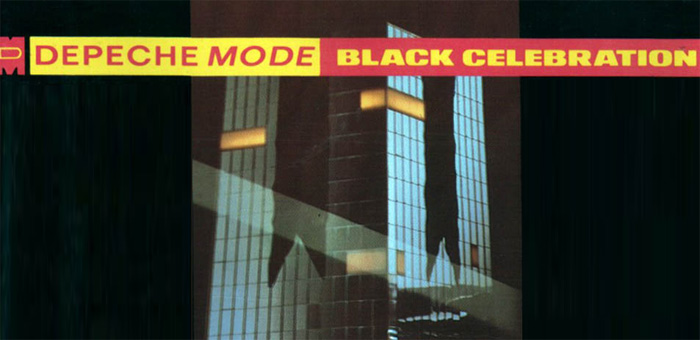
RETRO #2: BLACK CELEBRATION REVIEWS

When Black Celebration was released, Depeche were still viewed with suspicion in their home country. Their move from an angelic synthpop boy band to metal bashing purveyors of gothic synth majesty was not taken that seriously in the U.K. and so, a lot of the music press tended to treat them pretty harshly. The album's reviews were mixed to say the least which, when you look back on them now, is pretty funny given what Black Celebration did for Depeche in terms of increasing their profile. Anyway, I thought it would be interesting to see what the music press had to say. Again, thanks very much to the brilliant DM TV Archives for allowing me to plunder their site.


Let's start on a relatively positive note...

15 MARCH 1986 - RECORD MIRROR

Here are some things to admire about Depeche Mode: (1) their self-sufficiency, (2) their refusal to follow anything but their own fashion, (3) their refusal to be anything but themselves, (4) their unswerving ability to come up with great, fresh melodies. 

Black Celebration is a comfy progression for the Deps, but it contains no huge surprises. It keeps to the rules they set for themselves in terms of quality, value for money, tunefulness and experimentation. It kicks off with three killer tracks – Black Celebration, Fly On The Windscreen and A Question Of Lust, the latter being a prize crystal-clear, soaring Mart-on-vocals special. But it really is like putting all your cards on the table before the game’s finished.

Of the raunchier numbers, A Question Of Time stands out, as does the single Stripped and the moody Dressed In Black. New Dress, although it pumps and throbs, has rather excruciating lyrics, ditto Sometimes, one of the rather too many sweet little ballads. Although the melodies are gorgeous, Martin seems preoccupied with sounding like the gawky school choirboy. Mr. Gore is again lyrically concerned with tenderness, sweetness, closeness with another, and putting his heart on his sleeve. That’s fine, balanced against Depeche Mode’s more exciting, sinister side. Beware the girly swot notebook with the arrow through the heart, boys, and you’ll rool OK. Strength through wimpery!
Betty Page

Not a bad start. The next one just gets it all wrong though, but that's what Sounds tended to do

15 MARCH 1986 - SOUNDS 


DEPECHE MODE: no nudes is good nudes 


DEPECHE MODE 'Black Celebration' (Mute STUMM 26) **1/2


THE TV'S burnt the toast, the hoover's eaten the carpet and, in the background, pop's parasites are chewing at life and spitting out synthesised saccharine that dissolves in the air and not in the heart. They stride purposefully down paths of misguided desire...and get lost. Depeche Mode play Depeche Mode with conviction, the mould is cast and the cast are convinced. As menacing rhythms beat beneath treacle-covered whims, they sing of sex with disposable belief. When naivety swamped their soul, youth was held up as the reason — now, though, no such excuses are valid and the real world still waves from afar. 

Black Celebration is a vision of love as seen through the eyes of pop's 'subversives' (sic), mean, moody and marmalade. Life can be a bitch when you're cast as court jester and you've dreamed of being king. Fly On The Windscreen is too perceptive for lunch. "Death is everywhere/There are flies on the windscreen/For a start/ Reminding us we could be torn apart"Thanks lads, but I've eaten — besides, I've swallowed too much shit already. 

Depeche Mode are bored with last week's toys and, anyway, SPK wanted their angle grinders back. SO now they're busy playing with John Carpenter's ideas, pulling the legs off gripping soundtracks and turning them into harmless scenes of banality, with no twists and many happy endings. I hate happy endings. When they start singing songs about Princess Di's clothing, New Dress, you know that you're in safe hands and that there's nothing lurking around darkened corners to surprise you. But Depeche still reign supreme in the world of programmed pap, their music still has a nagging simplicity that is ensnaring. 

When hinting of depth, they beg an inquisitive leap, but such a foolhardy act only gets your ankles wet as their nursery rhymes squidge between your toes. I treat the garden to my presence and reflect on their poetic observations: "Sometimes/Only sometimes/1 question everything/And I'm the first to admit/If you catch me in a mood like that/I can be tiring/Even embarrassing." Upon digesting this gloriously incisive self appraisal, I let out a euphoric cry before tearing up the sleeve and feeding it to the birds.

KEVIN MURPHY

Thanks Kevin Murphy. That was incredibly incisive. I imagine he actually got paid for writing that which says more about his employers than it does about him. Let's see how the NME dealt with it. Ah yes, in that classic NME way...

15 MARCH 1986 - NME


Nipple Erectors
Somewhere, between Basildon and Berlin, is a place that Depeche Mode call home. It's an uncomfortable abode though it gleams and sparkles with pristine decor and designer-built functionalism, a matt-black (naturally) dream home whose geometrical symmetry hides a thousand sins. Although Depeche Mode - and their mainman/songwriter Martin Gore especially - long for that certain Euro-ambience, these four suburban boys are forever blighted by a peculiarly English sense of propriety, a pop protocol that drips with politeness.

This well-behaved music threatened to slip from its axis on '83's quite invigorating Construction Time Again when the awakening promise of Everything Counts and More Than A Party approached the realm of cheeky subversion. Alongside Gore's political awareness grew an unhealthy fascination with the sturm und drang of German industrial culture, the viral music of Neubauten and our own Test Dept. Yet what tension Depeche Mode possessed of late - and there was little to be detected on last year's atrophied Some Great Reward - came from the frisson of Gore's dark Teutonic pretensions with the continued tyranny of studied, harmonious order that his three accomplices seemed quite happy to perpetuate. As a virus, Depeche Mode's music is closer to sleeping sickness than to any nerve-wrenching disorder. Worse still, the psychology-by-numbers cant of a song like Masters And Servants [sic] teetered ominously close to the chanting histrionics of a Tears For Fears' "Shout! Shout! Let it all out!" exegesis.

On Black Celebration, the contradictions continue and continue to remain unresolved. Martin Gore's presence is stamped all over this album, not least in the sex-death-lust angst which informs virtually every lyric whilst the accompanying music, although often hinting at impending disorder, is a paradigm of well mannered electro-pop. Opening with the title song, Black Celebration, which has nothing to do with the recently established Martin Luther King Day and a lot to do with being stoical in the face of life's sheer mundaniety, the album establishes a mood that is dark yet faintly ridiculous. Over those perfectly constructed jigsaw melodies, David Gahan's cloyingly winsome voice ennuciates Gore's adolescent fragments of despair. Fly On The Windscreen includes the immortal line "death is everywhere" over a propulsive, multi-layered background complete with dismembered voices and cut-up sound patterns that are actually quite winning. Again, on A Question Of Lust, the overblown introspection of the lyrics defeats serious analysis whilst Sometimes approaches the analyst's couch as Gore, via Gahan, informs us, without a hint of irony, " ... I'm the first to admit/If you catch me in a mood like this/I can be tiring/Even embarrassing". Never.

It is left to the music to provide what relative highlights there are and, within their own parameters, Depeche Mode create a resonant, if undemonstrative techno-pop tapestry where the various percussive and melodic components often lend a rich textured sheen that is not without a certain depth. A Question Of Time, with its rising and falling structure, manages to perfectly complement an exceptionally curt and aggressive Gore lyric whilst New Dress ruptures the prevailing introspective and fingers the media trivialisation of "real" news. Indeed, when the songs address topics other than the composer's state of mind - as on the evocative exploration of loneliness that is World Full Of Nothing - Depeche Mode sound like a lot more than just a high tech, low-life melodrama. For the most part, however, they continue to provide a soundtrack for the up-to-date, matt black bedsit: dark, yet faintly ridiculous.
Sean O'Hagan

Firstly, Some Great Reward was from 1984. Secondly, it's Master And Servant. Thirdly, Martin sings Sometimes. Fourthly, that's just a load of bollocks. What did the NME's arch rival and, incredibly enough, generally worse Melody Maker have to say?


15 MARCH 1986 - MELODY MAKER


BLACK IN THE NIGHT

The same old song. That Depeche Mode are willing to worm their way out of their lucrative niche as mega-cuddlies is encouraging even if they've been at it so long they've fashioned a career from sweet abrasion. Damn sure they know they’ll never swap their teddy bear image for chart terrorism but the effort has become the sole fuel to Martin Gore’s fixations.


It’s depressing, though, that in their own small struggle for personal and artistic dignity, Depeche have only managed to trade in one set of cliches for another – white for black, bright for bitter, tunes for twisted chants.


Black Celebration finds Depeche even more over-anxious than they were on the depressing Some Great Reward to shock for the sake of it, pussycats desperate to appear perverted as an escape from the superficiality of teen stardom. Dressed In Black is just Master And Servant revisited, an adolescent masturbatory fantasy. Similarly, Fly On The Windscreen attempts to evoke the claustrophobic swamp intertia of Mute labelmate Nick Cave’s Wings Off Flies. These songs tell us, time and again, that they’re desensitised to love, that the only release open from spiritual malaise is a momentary tactile passion, a lunging, groping lust.

More saddening still is New Dress, an unbridled attack on press hypocrisy which, in its humourless juxtaposition of headlines, (“Famine horror, millions die”) against its refrain (“Princess Di is wearing a new dress”) recalls nothing more than a secondary school poem.

As always, it’s difficult to discern whether Martin Gore’s clumsy lyrical truisms are intent on promoting his over-apparent desire to assume a sinister dimension on whether he’s honestly concerned for his subject matter. Are the Depeche of A Question Of Time revelling in the scenario of under-age sexploitation as an exercise in biting the hand the feeds, or are they genuinely dismayed at the inevitable moral decay of this rotting nation?

Then again, it’s precisely Gore’s naively logical lyrical equation, wedded to the established Depeche linear musical mode, that occasionally adds up to something successfully whole, something that incorporates optimism. The title track’s a throbbing metallic purging of the daily grind, Stripped is pleasingly minimal, if mannered, and there’s a wonderful hope in the appalling New Dress: “You can’t change the world / But you can change the facts / And when you change the facts / You change points of view / If you change points of view / You may change a vote / And when you change a vote / You may change the world”.

But it’s when Depeche are being unconsciously throwaway, when they relax their straining against their reputation, that they attain the sublime. A Question Of Lust is gorgeous, an Almondesque torch vocal mounting a simple electronic code worthy of The Human league. Mostly, though, Black Celebration is Depeche fucking with their formula and the real shock is the insight it provides into the troubled psyche of Martin Gore, a lad struggling to grow in public and, for all his opportunities, finding only sleaze and filth to feed off. They’d have it sickening – Gore a willing victim desiring the symptoms he purports to despise.


Silly boys.

Pah. Ok, it's better than the NME piece, but still...Dressed In Black "an adolescent masturbatory fantasy?" Sod off. 

No 1. magazine was succint but thankfully seemed to like the album

22 MARCH 1986 - NO. 1 MAGZAINE

Depeche Mode are one of those bands whose music shouldn't be given the “gut reaction” treatment. Following last year’s Some Great Reward, this LP sees Martin Gore following much the same lines. He will persist in asking the kind of questions that there really are no answers to. Musically there is a riot of atmosphere which should ensure many a Depeche fan will be dipping into this one over and over again. Best tracks, aside from the single Stripped, are Here Is The House and World Full Of Nothing.
4 stars

See NME? That's how you do it. Plus No.1 got it right about Depeche fans dipping into the album over and over again. 

The L.A Times review perhaps gives us a clue about what was going to happen to Depeche Mode in the U.S as they clearly love it. Note though the mention of "the last track." But Not Tonight featured on the U.S. version of the album for reasons I've gone into and inevitably moaned about previously

27 APRIL 1986 - L.A TIMES

Love A La Mode
RECORD RACK
LORI E. PIKE

"BLACK CELEBRATION." Depeche Mode. Sire. 

David Gahan's alternately husky and breathy vocals are emotive, and the blend of warm tones with ominous chugs and clangs makes these sleek, modernistic and enigmatic songs a perfect sound track for tentative love in the industrial age. Songwriter Martin Gore has pulled off a double-whammy, backing evocative, thoughtful lyrics with a seamless suite of danceable, hummable melodies. The tension builds and releases as Gore periodically wrests aside his bleak cynicism to let vulnerability and hope gleam through. Thus, the utter despair of Fly on the Windscreen eventually gives way to a tender homily to home and security in Here Is the House. But the best is saved for the last track, But Not Tonight, a bouncy, refreshing exultation about new beginnings and being alone but not lonely. Rarely has introspection been so tuneful.

I don't think anyone would agree that But Not Tonight is the best track even on the But Not Tonight 7" single, but this review shows that Sire must have known the American record market I guess. Or at the very least, they knew what Lori Pike liked.

The Washington Post then had its say

12 JUNE 1986 - THE WASHINGTON POST

MICROCHIP music for moody moderns: Black Celebration is another batch of dire and doomy electrodirges from Depeche Mode, pop pap apparently aimed at a burgeoning market of budding adolescent existentialists.

Songs like Black Celebration and Fly on the Windshield (sample lyrics: "Death is everywhere / There are flies on the windscreen for a start / Reminding us we could be torn apart / Tonight...) would seem likely to reinforce suicidal tendencies, but taken as a whole, this album is so unremittingly morose it becomes almost comical. 

Over the space of five albums, Depeche Mode has refined its distinctive sound, marked by a hammering dance beat and trademark musique concrete blend of "industrial" metallic noises and odd sampled sounds - breathing, slamming doors, flushing toilets. 

Many of the production gimmicks on Black Celebration are arresting, but the group has simply put more polish on the basic formula. Singer/songwriter Martin Gore's listless, limited vocals sound as if he's delivering them through a vacuum cleaner, snapping on different attachments for each number. The songwriting is similarly formulaic, with each song based on a compilation of elementary electronic riffs, though Depeche Mode is getting more ambitious - the synthetic choral chant from It Doesn't Matter is baldly borrowed from the Philip Glass canon.

Ok, just to be clear it's WINDSCREEN not Windshield. Just because that's the American word for the perfectly good, standard English language version doesn't mean you can change it when IT'S NOT WHAT THE BLOODY SONG IS CALLED! I mean, you don't refer to the band Pavement as Sidewalk do you? Plus the review is a load of old arse. "Quick I'd better mention Philip Glass so that I sound pretentious." Good grief.

Rolling Stone paid a bit more attention...


By Mark Coleman

Routinely dismissed as a band of synth-pop robots, Depeche Mode actually uses its machines to make some of the most human sounds around. Black Celebration is certainly this British quartet's most melodic effort to date: the clanging disco-concrete fusion of early LPs like Construction Time Again has mellowed into a brand of brooding, romantic music only hinted at on last year's Some Great Reward. "I haven't felt so alive in years," gushes singer Dave Gahan on But Not Tonight, this LP's ghostly closer, although for composer-lyricist Martin Gore, even celebration is pretty bleak.

Gore dissects his gloomy obsessions with wit and intelligence. He's abetted by his bandmates, inventive technicians who understand that machines weren't meant to sound like souped-up electric organs. Despite its campy horror-show title, Fly on the Windscreen — Final is the sort of matter-of-fact meditation on mortality most people flash on behind the wheel of a car. A bank of synths buzz ominously through the verses of Fly, amplifying the unease, then whoosh gratefully when the first chorus reaches for life's only solace: "Come here kiss me NOW."

Most of these ditties are unabashed love songs, albeit brutally honest — quirky ones that pick apart popular notions of emotional independence (A Question of Lust) and adolescent sex (A Question of Time, World Full of Nothing) to an itchy, mechanized beat. Songs like these and some serious image-mongering have won Depeche Mode a loyal teen following, appropriately enough. But underneath their bleached-blond, black-leather pose lurks musical maturity and a wry sensibility deserving of a wider (read adult) audience.

But Not Tonight a "ghostly" track? That's a first.

Let's leave the last word to U.K. pop mag Smash Hits. They always loved Depeche and they loved Black Celebration


DEPECHE MODE: Black Celebration (Mute)

Despite their seemingly endless stream of brilliant singles Depeche Mode always seem to go a bit wonky when faced with a whole album to fill. Not this time though. Black Celebration doesn't only see them go a bit weirder with lots of dark, mysterious percussive episodes (sung by Dave Gahan) snuggling up against sweet, fragile and rather sinister ballads (sung by Martin Gore) but is also the first time they haven't had to throw in any second-rate stodge. Their best album yet (apart from the very brilliant Singles LP, that is) (8 out of 10)


So there you go. How the U.K music press and a couple of American reviewers treated Black Celebration when it came out. Ultimately, it's fun to read these things, but even now, the likes of Melody Maker and NME still have the ability to rile me - and I really am far too old to react like that.